Study
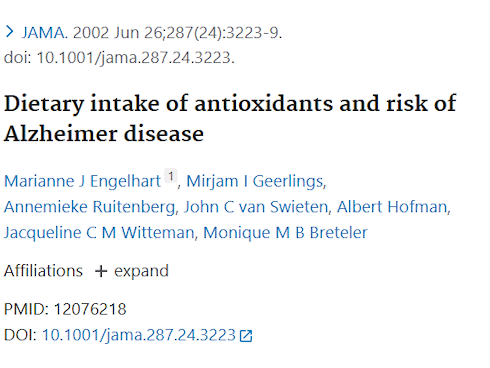
The researchers followed the study participants from the early to the late 1990s. Before the study began, the Rotterdam residents were reasonably healthy and free of dementia. Using questionnaires, the researchers gained insight into the participants' dietary habits and were able to estimate their daily intake of vitamin C, vitamin E, beta-carotene, and flavonoids.
Results
During the six-year period in which the epidemiologists tracked the Rotterdam residents, 197 participants developed some form of dementia. Of these, 146 developed Alzheimer's disease.
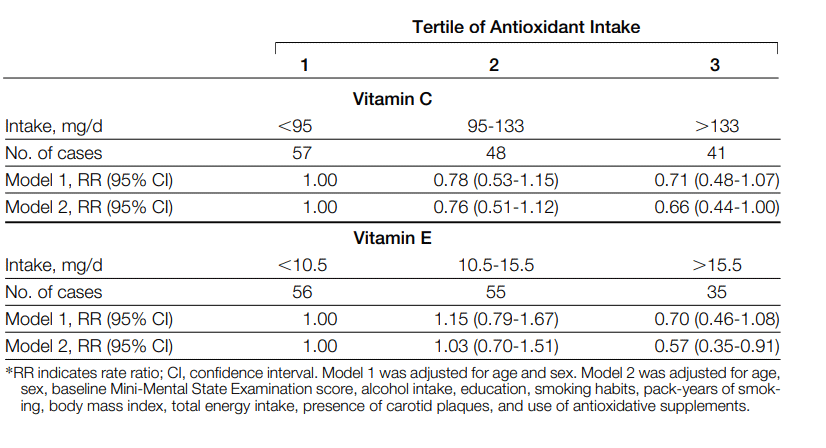
After adjusting for the effects of other factors as much as possible, the researchers found that the intake of vitamins C and E from regular foods influenced the risk of developing Alzheimer's disease.
Study participants with a relatively high intake of vitamin C - more than 133 milligrams per day - had a 34 percent lower risk of Alzheimer's than those who consumed less than 95 milligrams per day. Eating one small red bell pepper or two large kiwis provides that 133-milligram intake.
Study participants with a relatively high intake of vitamin E - more than 15.5 milligrams per day - had a 43 percent lower risk of Alzheimer's than those who consumed less than 9.5 milligrams per day. Two handfuls of nuts or sunflower seeds are enough to achieve that high level of vitamin E intake.
Click on the table below for a larger version.
The researchers examined supplement use separately. They found no protective effect. This article therefore focuses solely on dietary vitamin C.
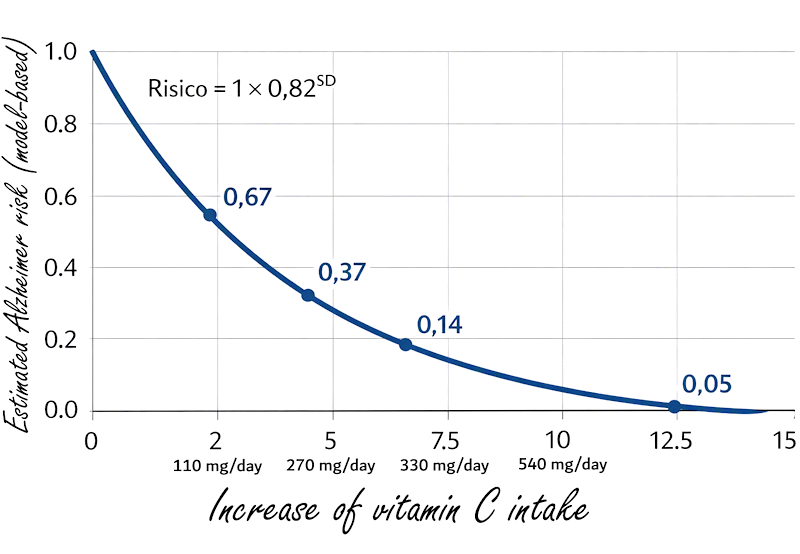
Based on the data, we calculated - just for the sake of it - how an increase in vitamin C intake could theoretically reduce the risk of Alzheimer's. In doing so, we are assuming that the protective effect of vitamin C is linear.
Conclusion
We'll see if we can find more studies. More to come soon.