Study
On day ten, the researchers divided all mice that had received injections of cancer cells into five groups. There was a group that received only injections of cancer cells [SEC]. Additionally, there were groups that received daily oral vitamin C, Grape Seed Extract, or vitamin C + Grape Seed Extract.
Incidentally, the researchers made their Grape Seed Extract themselves. They bought grapes, removed the seeds, dried them, ground the seeds into powder, and then extracted the active substances using water.
In addition, there was also a control group that received a standard cancer medication. That medication was doxorubicin, a widely used cancer drug. Oncologists use doxorubicin in the treatment of breast cancer, leukemia, lymphoma, and sarcoma, among others.
The supplementation period lasted 14 days.
Results
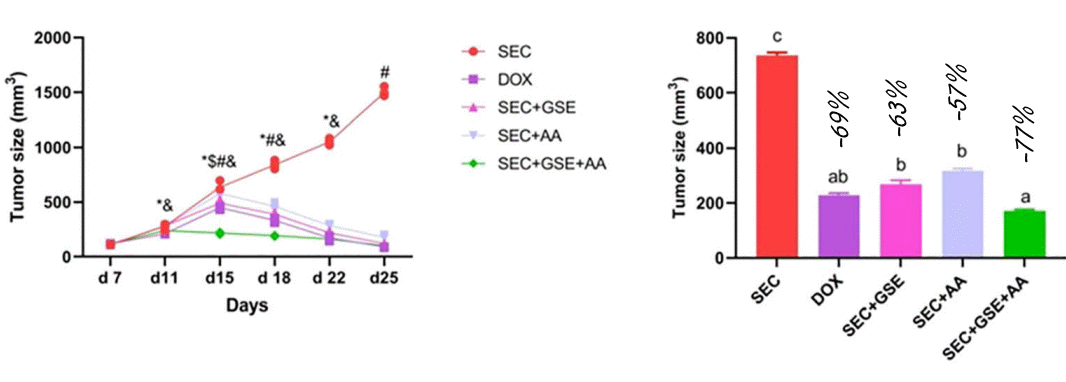
Doxorubicin inhibited tumor growth slightly better than vitamin C and Grape Seed Extract individually. However, the combination of vitamin C and Grape Seed Extract outperformed that of doxorubicin.
Doxorubicin inhibited tumor growth by 69 percent. The combination of vitamin C and Grape Seed Extract reduced tumor growth by 77 percent.
Click on the figures below for a larger version.
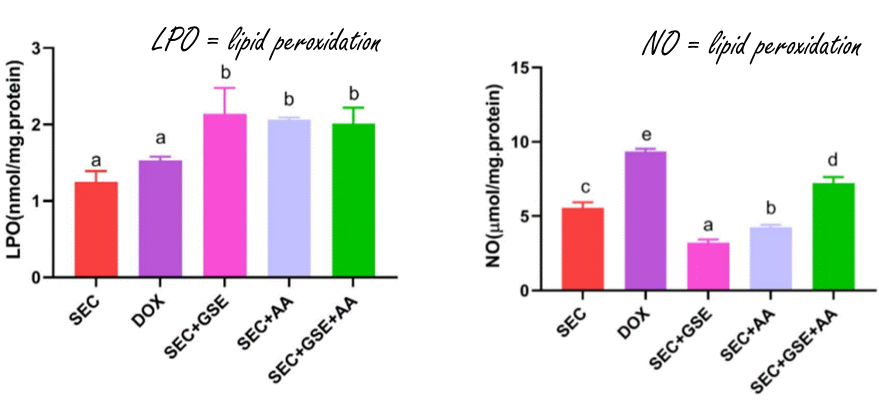
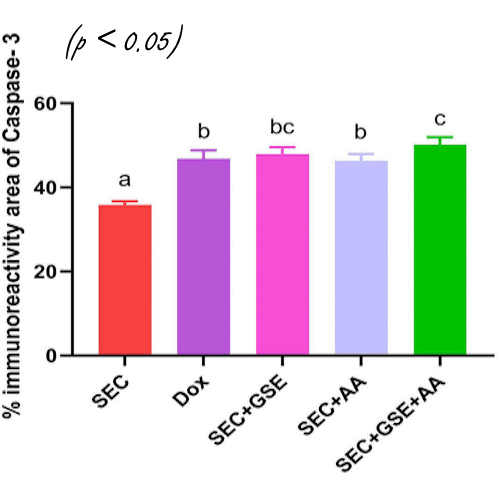
This indicates that the combination had led to an increase in free radical activity in the tumor cells. This was possibly due to a disruption of mitochondrial function in the tumor cells or the activation of suicide enzymes such as caspase-3.
Incidentally, in a human Czech study conducted among women with breast cancer, an extract from oyster mushrooms had a similar effect, although the mechanism was likely different. Just saying.
Dosage
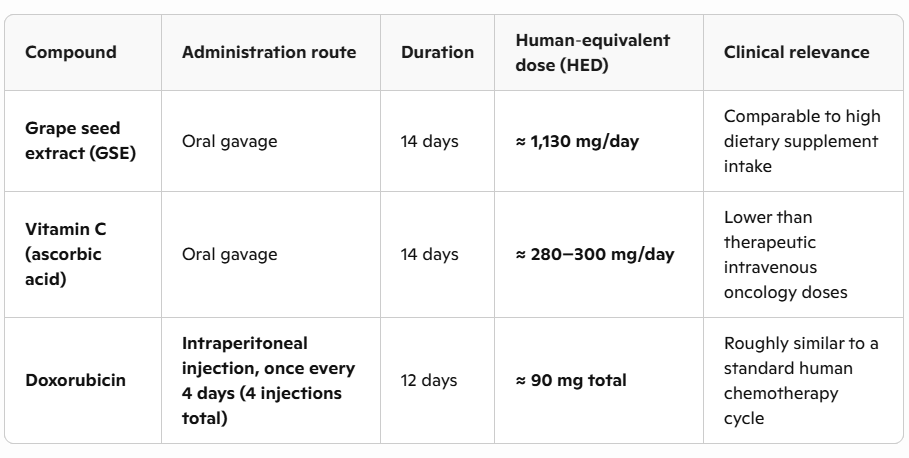
The table below shows how much doxorubicin, Vitamin C, and Grape Seed Extract the mice would have received if they had been adult humans.
The estimated human dosage of doxorubicin is relatively low, but it is just within the range administered by oncologists in their practice. The human dosage of Vitamin C is certainly not high. The dose of Grape Seed Extract is roughly a factor of three to four higher than what manufacturers of most supplements recommend, but it falls within the range of doses that researchers have tested in human studies.
We mentioned above that the researchers used a water-based Grape Seed Extract they produced themselves. This consisted of approximately three-quarters sugars. Sugars do not contribute to the protective effect.
Grape Seed Extracts in supplements are often alcohol-based. These extracts contain hardly any sugars. After comparing analyses of these extracts [Molecules. 2015 Jan 29;20(2):2190-207.] with what the Egyptians say about the composition of their extract, we were able to compile the table below.

Because any commercially available extract contains significantly more gallic acid and quercetin analogues, and because these substances in particular have a cancer-inhibiting effect, we suspect that conventionally available extracts are effective at a lower dose than the dose tested by the Egyptians.
This refers to doses that are a factor of three to four lower. The human equivalent of those doses therefore comes to 300-400 milligrams per day.
Missed opportunity
It is unfortunate that the researchers did not examine the combined effect of doxorubicin, vitamin C, and Grape Seed Extract. Such a comparison could lead doctors to take that combination more seriously.
Doxorubicin has serious side effects. The drug is harmful to the heart muscle, among other things. [J Cardiovasc Dev Dis. 2025 May 30;12(6):207.] There are quite a few cancer survivors who have to live with those side effects. If a combination with vitamin C and Grape Seed Extract were to lead to an equally effective but lower dose of doxorubicin, this would save a lot of suffering.