Study
The researchers aggregated the trial results and reanalyzed them.
The main bioactive compounds in grape seed extract are oligomeric proanthocyanidins (OPCs) such as procyanidin C1 and procyanidin B2. These polyphenols activate the enzyme endothelial nitric oxide synthase in the blood vessel walls. This enzyme releases nitric oxide from arginine, making the blood vessel walls more flexible. Furthermore, OPCs inhibit endothelin-1, a peptide that constricts blood vessels.

Results
Supplementation also proved effective in people with mild hypertension. The researchers defined mild hypertension as high-normal blood pressure and grade 1 hypertension. This doesn't mean that supplementation has no effect on more severe hypertension - grade 2 and higher. Researchers simply didn't look at severe hypertension in the studies they used.
Click on the tables below for a larger version.


Moreover, supplementation was more effective if it lasted 8 weeks or longer - and if the daily dose remained below 800 milligrams. In the most convincing studies, researchers used doses of 150-300 milligrams of grape seed extract.
Conclusion
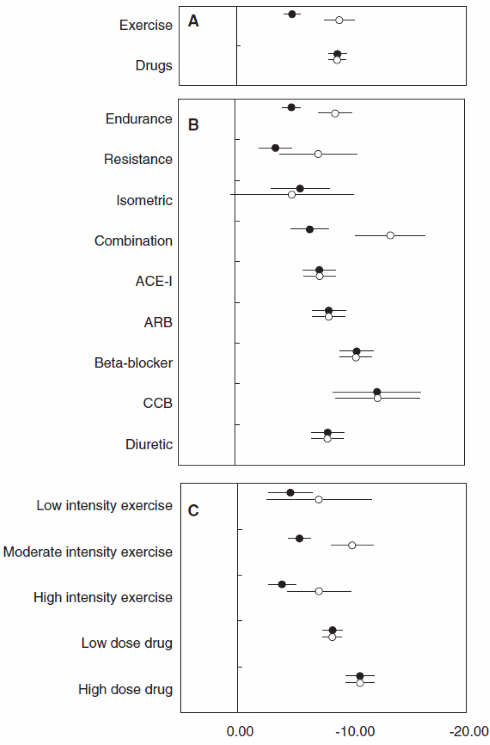
According to this meta-study, supplementation with grape seed extract can, under favorable conditions, lower systolic blood pressure by 8-11 points. This is roughly the effect of a low-dose ACE inhibitor.
A 10-point reduction in systolic blood pressure equates to a 20 percent reduction in the risk of stroke and a 15 percent reduction in the risk of vascular disease.