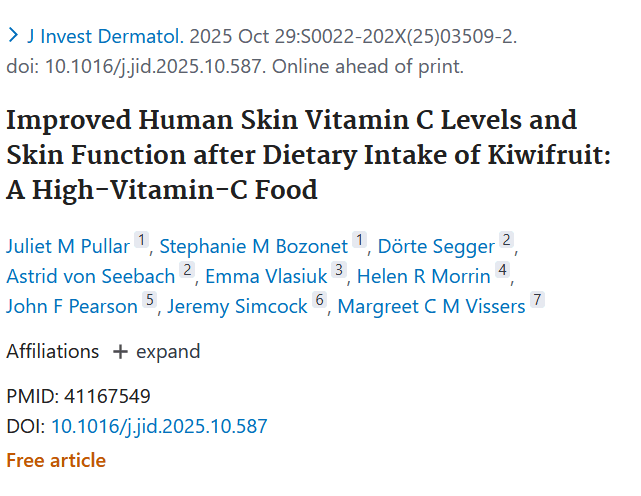
Study
The researchers used Sungold kiwis. This variety contains considerably more vitamin C than regular green kiwis. A green kiwi provides approximately 90 milligrams of vitamin C, while a Sungold kiwi provides approximately 160 milligrams. In the experiment, the subjects therefore increased their vitamin C intake by approximately 320 milligrams per day.
The experiment was partially funded by Zespri International, an organization representing more than three thousand kiwi growers worldwide.
Results
As expected, vitamin C concentrations increased with kiwi supplementation. In the blood, they increased by approximately 30 percent. In the outermost layer of the skin, the epidermis, the researchers observed a 25 percent increase in concentration.
Click on the figures below for a larger version.

What did change was the skin's density. In the dermis, where fibroblasts produce collagen, more cross-links formed between the collagen strands.
At the same time, the researchers observed that in the outermost layer of the skin, the epidermis, the concentration of the protein Ki-67 increased by approximately thirty percent. This means that the cells in the epidermis, the keratinocytes, had started dividing more. The epidermis's ability to repair itself after damage had therefore increased.

Mechanism
Proline and lysine are the building blocks of collagen. Thanks to the hydroxyl groups on proline and lysine units, collagen strands can form networks with each other.
Alternative
There are even more ways to increase your vitamin C intake by 320 milligrams per day with simple dietary changes. One is to eat one yellow bell pepper every day, or one and a half orange bell peppers.
We based the table below on data published by Nerdy Nerdy in 2018 in Alchemy Journal Penelitian Kimia. [Alchemy Jurnal Penelitian Kimia. 2018;14(1):164-77.]