|
The older you are, the more you benefit from vitamin D supplements
A brand new study shows that as many as sixty percent of elderly people have a vitamin D deficiency. A forgotten study, which dates back to the last century, shows why.
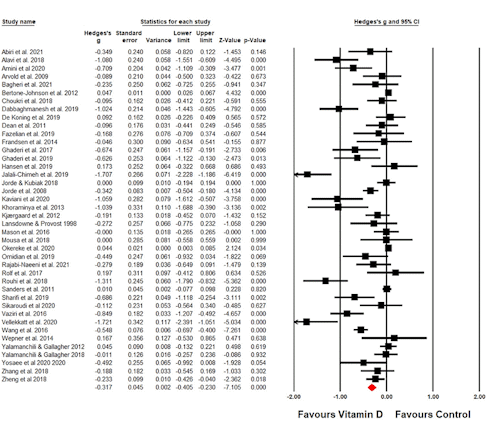
A recent meta-study
Readers of this website now know that in the Northern Hemisphere tens of percent of the population consumes less vitamin D than bioscientists consider optimal. In the first month of 2024, molecular scientists from Gerash University of Medical Sciences in Iran published a meta-study in which they estimated, based on previously published research, how often vitamin D deficiency occurred specifically in the elderly.
If the Iranians considered everyone with a vitamin D level lower than 20 nanograms per milliliter or 50 nanomole per liter as vitamin D deficient, almost sixty percent of the elderly fell into that category. [Indian J Orthop. 2024 Jan 21;58(3):223-30.]
An old experiment
As early as 1985, American nutritional scientists Julia MacLaughlin and Michael Holick published a study in the Journal of Clinical Investigation in which they irradiated skin tissues with UV light in a laboratory. The tissues came from people aged 8 to 92 years.
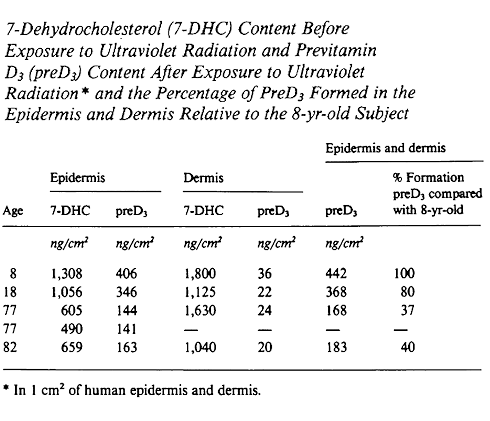
Roughly 80 percent of all vitamin D3 circulating in the body of modal Homo sapiens comes from the skin. It produces vitamin D when sunlight falls on it. However, the Americans discovered that there was also less 7-dehydrocholesterol in the skin of the elderly. 7-Dehydrocholesterol is a precursor of vitamin D3 that changes into pre-vitamin D3 under the influence of UV light.

Mechanism
When the researchers irradiated the skin tissues with UV light, the skin of the elderly produced considerably less pre-vitamin D3 per square centimeter than the skin of the young.
Conclusion
"For those elderly [...] who do not obtain adequate vitamin D nutrition from their diet and who infrequently expose a very small area of skin (such as hands and face) to sunlight, the greater than twofold decline in their epidermal stores of 7-dehydrocholesterol may very well put them at risk for development of vitamin D deficiency", conclude MacLaughlin and Holick.
"These individuals would benefit by increasing their dietary intake of vitamin D and by increasing their exposure to the sun."
Source:
J Clin Invest. 1985 Oct;76(4):1536-8.
More:
Vitamin D3 supplement keeps elderly covid-19 patient alive 12.09.2021
High vitamin D level lengthens life expectancy of elderly Dutch 21.11.2009
Vitamin D delays aging at genetic level 28.12.2008
Archives:
Vitamin D
Vitamins
|