|
Definition: "An ergogenic aid is any substance or phenomenon that enhances performance "
|
|
||||||||
21.11.2009 |

|
|
High vitamin D level lengthens life expectancy of elderly Dutch
Vitamin D helps you live longer. The more vitamin D you have in your blood, the less your chance of a fatal heart attack or any other fatal cardiovascular event. Austrian and Dutch researchers report on their findings in Clinical Endocrinology. They studied 614 elderly Dutch men and women for six years.
Vitamin D is really a hormone – an underestimated hormone. According to recent research, the inhabitants of the northern hemisphere of this planet all have too little vitamin D in their body. We are dependent on sunlight so that our skin can make vitamin D from precursors. But because we live such indoor lives our skins see far too little sunlight. Supplements are a way of getting round this, as there's not enough vitamin D in food to rely on just eating healthily.
The importance of vitamin D is demonstrated in studies on elderly people. Where elderly subjects took vitamin D their chance of dying was reduced, and particularly the risk of developing cancer. Molecular studies have shown that people with high vitamin D levels have younger DNA, and therefore cells that have longer to go.
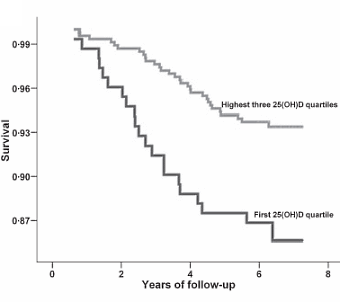
The elderly people in the lowest quartile had chance of dying that was 2.24 times as great as that of the people in the three higher quartiles. After the researchers had corrected for as many other factors as possible, the figure was still a factor of 1.98. The figure below shows how big the effect was.
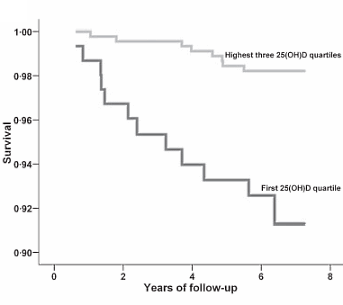
The figure below is similar, but shows the chance of dying from cardiovascular problems. In the lowest quartile the chance of dying from a cardiovascular event was 4.78 times a great as in the other quartiles. When the researchers had corrected for other factors the figure had increased to 5.38.
In this group a high vitamin D level protects above all the heart and blood vessels, the researchers conclude. They back their claims up, citing recent research that indicates that a low vitamin D status increases blood pressure. A high vitamin D level inhibits the renin-angiotensin system.
For correctness' sake the researchers mention that the low vitamin D level may be the result of ill health, rather than the cause of it. But they say that to cover themselves; it's clear they don't believe it.
Source:
More:
|
|