Study
The researchers also knew approximately how much vitamin D was present in the children's bodies during the healing process. They then determined the influence of vitamin D status on fracture healing.
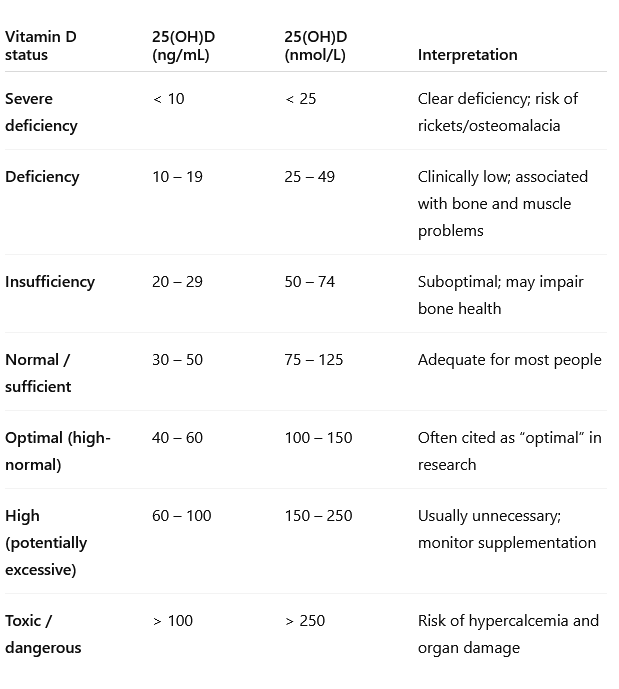
The researchers divided the children into a group with insufficient vitamin D and a group with sufficient vitamin D. They used the traditional cutoff point of 30 nanograms per milliliter and 75 nanomoles per liter. Just over sixty percent of the children were below this threshold.
That such a high percentage of children do not get enough vitamin D is not unusual in developed countries. And it is, of course, an excellent thing. At least for the pharmaceutical industry. A vitamin D deficiency contributes to the medical-pharmaceutical complex's profitability in countless ways. Of course, it's less enjoyable for the children themselves.
Results
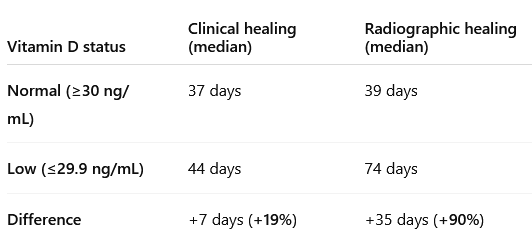
The effect of vitamin D on radiographic healing is even greater. With vitamin D concentrations that are too low, it takes a full 35 days longer (90 percent longer) for bone to fully heal on scans.
The tables below - click on them for a larger version - show the median healing time.
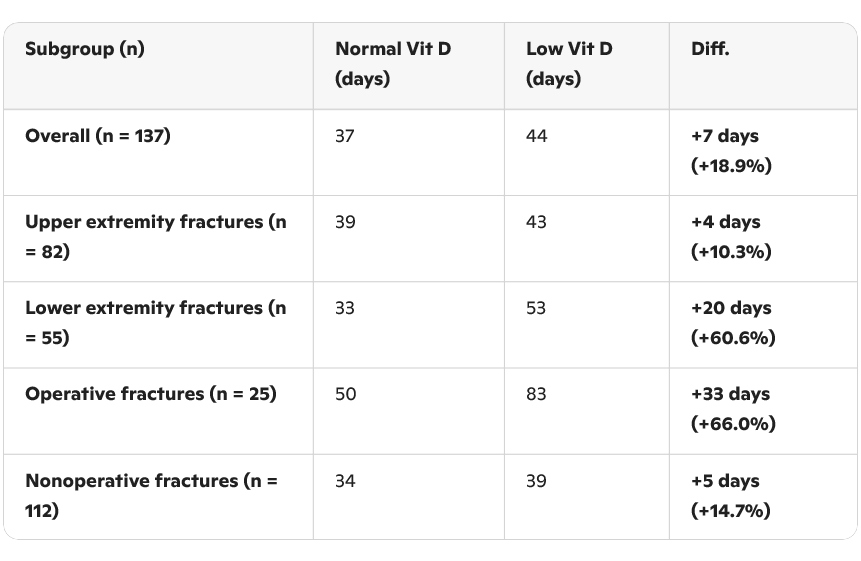
The positive effect of an adequate vitamin D status is stronger with a broken leg than with a broken arm. It is also stronger in the case of a bone fracture where doctors have had to intervene surgically.
You can see this in the table below. It relates to clinical healing. You can see the effect of vitamin D on radiographic healing [hier].
Conclusion
"Given its low-risk profile and potential for positive impact, pediatric orthopaedists could consider routine vitamin D and calcium supplementation in fracture patients", write the researchers.
"Further research is needed to determine if normalization of vitamin D levels with vitamin D supplementation alters pediatric fracture healing and clinical outcomes."