Study
The women had been diagnosed with cervical, ovarian, or breast cancer one to five years earlier and had subsequently undergone chemotherapy, radiation therapy, and surgery. The women were under observation.
For eight weeks, the women meditated five times a week in a laboratory room. Half of the women meditated in a room where the researchers consistently vaporized 3-5 drops of Hinoki oil. This was the experimental group.
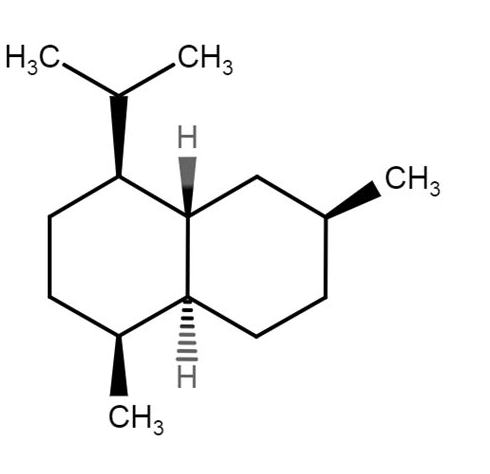
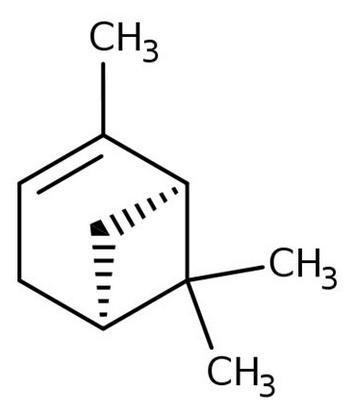
The Koreans were inspired by research on shinrin-yoku, or forest bathing. This research suggests that conifers release substances such as alpha-pinene, delta-cadinene, and T-murolol. Inhaling these substances reduces stress levels and improves the function of their immune systems. These same substances are found in volatile oils from conifers.
Results
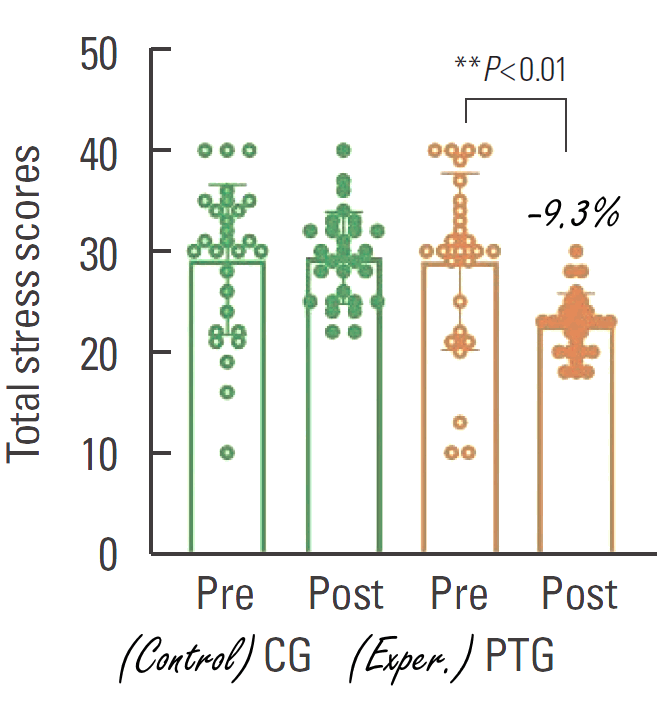
Before and after the eight-week period, the women completed a questionnaire measuring stress. The women in the Hinoki group reported a 9 percent decrease in their perceived stress, while the stress levels in the control group remained unchanged.
Click on the figures below for a larger version.
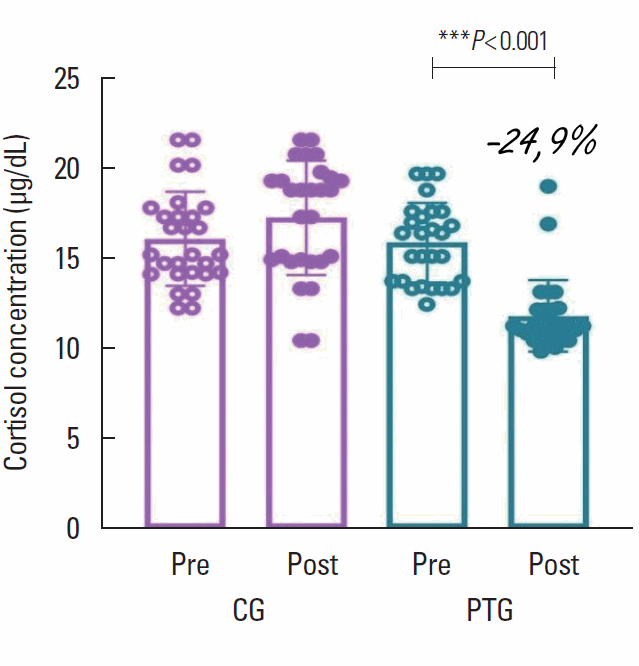
Exposure to the volatile oil increased the concentration of NK cells by 23 percent.
This in itself is a significant effect, one that you would expect to have biological effects - such as improved resistance to infection by pathogens or increased tumor control. In addition, the women's NK cells changed qualitatively.
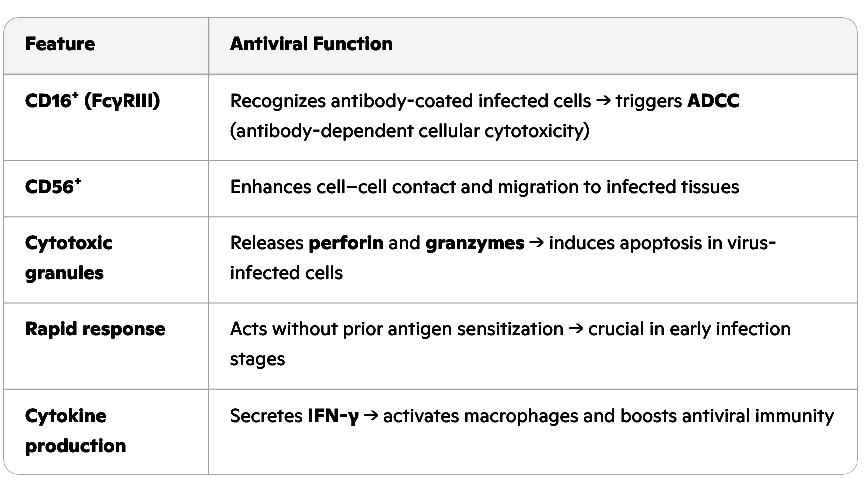
First, exposure to Hinoki oil caused the NK cells to produce more NKG2D. This protein recognizes tumor cells and makes NK cells more active. However, the production of KIR2DL3 decreased with exposure. KIR2DL3 recognizes healthy cells and inhibits NK cells.
Another protein - TIGIT - also decreased with exposure. TIGIT is a kind of switch that puts NK cells into a dormant state. Many older and therapy-resistant cancer cells have ways to increase TIGIT, so they have less to fear from NK cells.
The production of LFA1 increased. This protein allows NK cells to attach to cancer cells, making them easier to eliminate. NK cells do this, in part, through the protein perforin.
Perforin punches holes in cancer cells or cells infected by a virus. NK cells pump cell-killing granzymes and granulysin through these holes. And yes, the production of perforin also increased after inhaling Hinoki oil.
Click on the table below for a larger version.

Alternatives
|
Hinoki oil is not the only wood oil with such a composition. Oils from Alaska Yellow Cedar, Western Red Cedar, and Texas Cedarwood contain the same substances in approximately the same concentrations.