Study
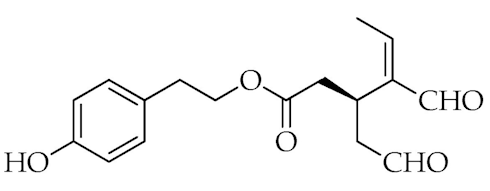
The researchers used HCT-116 cancer cells. These are human cancer cells with a mutation in the KRAS gene, causing them to grow and metastasize relatively quickly.
The mice used by the researchers did not produce functional T-cells and therefore did not reject human cells. Animal studies can never be directly translated to humans—and this applies doubly to animal studies using mice with a compromised immune system.
The researchers waited 2-3 weeks after introducing the cancer cells until the tumors had started to grow. Subsequently, they divided the mice into, among others, a control group [dpEVOO + ABC] and a group that received a daily supplement with oleocanthal [OC, oral]. There were two other groups, but we will leave those out of consideration for now.
After 21 days, the researchers determined the size of the introduced tumors. Additionally, they counted the metastases.
Results
Below you can see that oleocanthal supplementation reduced tumor growth in the colon by 97 percent in 6 male test animals. In the female mice, oleocanthal inhibited tumor growth by 98 percent.
Click on the figures below for a larger version.


The researchers also looked at metastases of the cancer to other organs. Supplementation with oleocanthal reduced the number of metastases by approximately eighty percent.
Mechanism
The researchers suspect that the microbiome plays a major role in the protective effect of oleocanthal. They created a type of Yakult from the faeces the mice that had received oleocanthal, administered it to cancer mice, and observed that the drink provided even better protection than oleocanthal itself.
We ourselves believe that the protective effect might also be the work of oleocanthal metabolites produced by the microbiome, such as oleocanthaldiol, oleocanthal monool, and elenolic acid derivatives of oleocanthal. The researchers created their Yakult variant in such a way that the supplement could well contain high concentrations of those metabolites.
Dosage
If the mice had been adult humans, they would have ingested 50-60 milligrams of oleocanthal daily. We actually do not know if there are supplements on the market with that dosage.
In theory, it is possible to ingest oleocanthal in those quantities through the more expensive types of olive oil, such as Koroneiki, Picual, Arbequina, and Coratina. We are talking about extra virgin olive oil, which is not only cold-pressed but also early-harvested. That olive oil tastes bitter and peppery.
Such types of olive oil contain such high concentrations of oleocanthal that you can reach 50-60 milligrams with 7-12 tablespoons per day. The concentration of oleocanthal varies considerably, so we cannot make it more precise for you.
We will look for a supplement anyway.