Microplastics
Anyway. We have to make do with what we have. Based on the South Korean review, we were able to create the table below, which gives an idea of which food products contain the most microplastics.
Click on the table for a larger version.
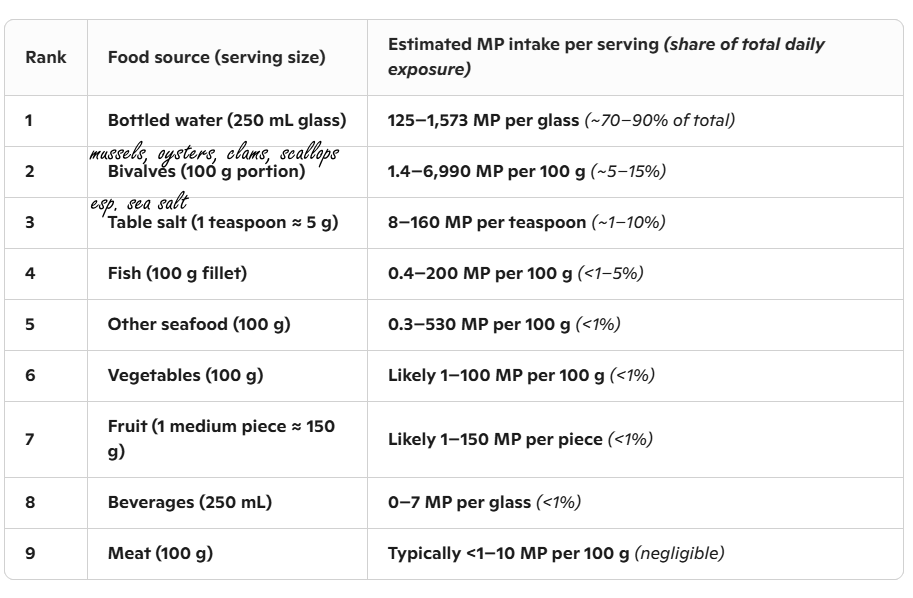
As you can see, the researchers simply counted the microplastic particles. It is not yet possible to accurately count the concentration of microplastics in any other way. Incidentally, the lack of a more objective method is also a reason for the mediocre quality of the research.
According to a German study from 2018, the microplastics in bottled water originate primarily from the PET bottles in which much of that water is packaged. [Water Res. 2018 Feb 1:129:154-62.] During filling, transporting, shaking, squeezing, opening, and closing the bottle, mechanical friction forces are generated that dislodge microscopic plastic particles.
The same thing happens, by the way, when unscrewing and screwing on the cap, which is often made of polypropylene.
We are referring, incidentally, to the PET bottles that are reused. Tap water [Blank], water from cartons, water from glass bottles, and water from disposable bottles contain far fewer microplastics.

Chitosan
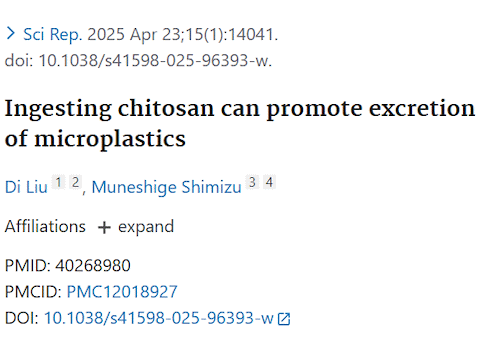
Even avoiding water and soft drinks from PET bottles will not prevent you from ingesting microplastics through food. According to a Japanese animal study published in Scientific Reports in 2025, supplementation with chitosan can ensure that you absorb fewer of these microplastics. You can read more about chitosan here.
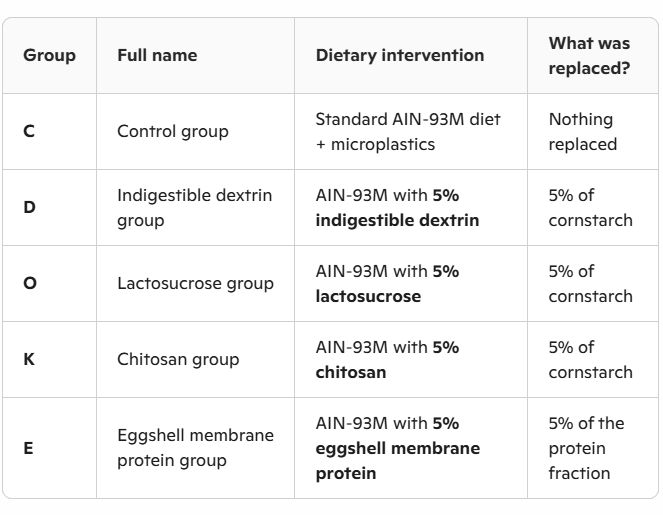
The Japanese researchers fed lab rats food containing microplastics for 6 days. They then divided the test animals into 5 different groups. These 5 groups all received different food, as shown in the table below.
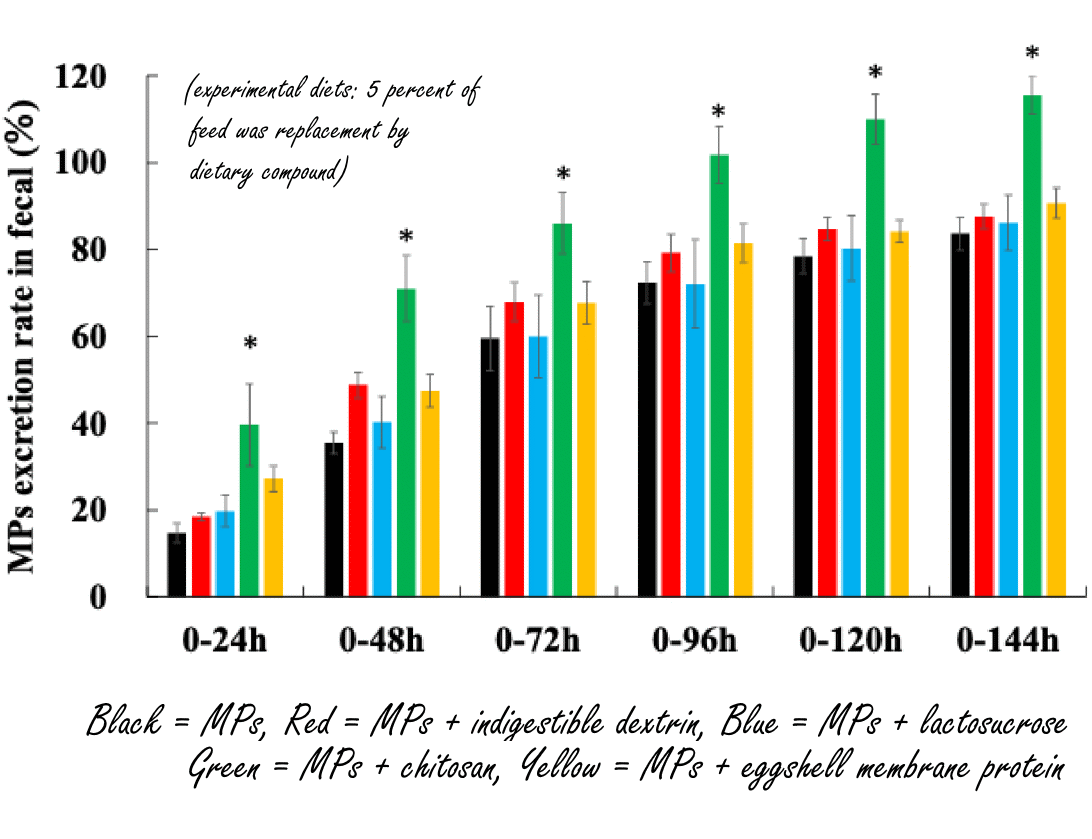
Adding microplastics to the food caused the rats to excrete more microplastics through their droppings. The excretion of microplastics was significantly higher in the rats that also received chitosan.
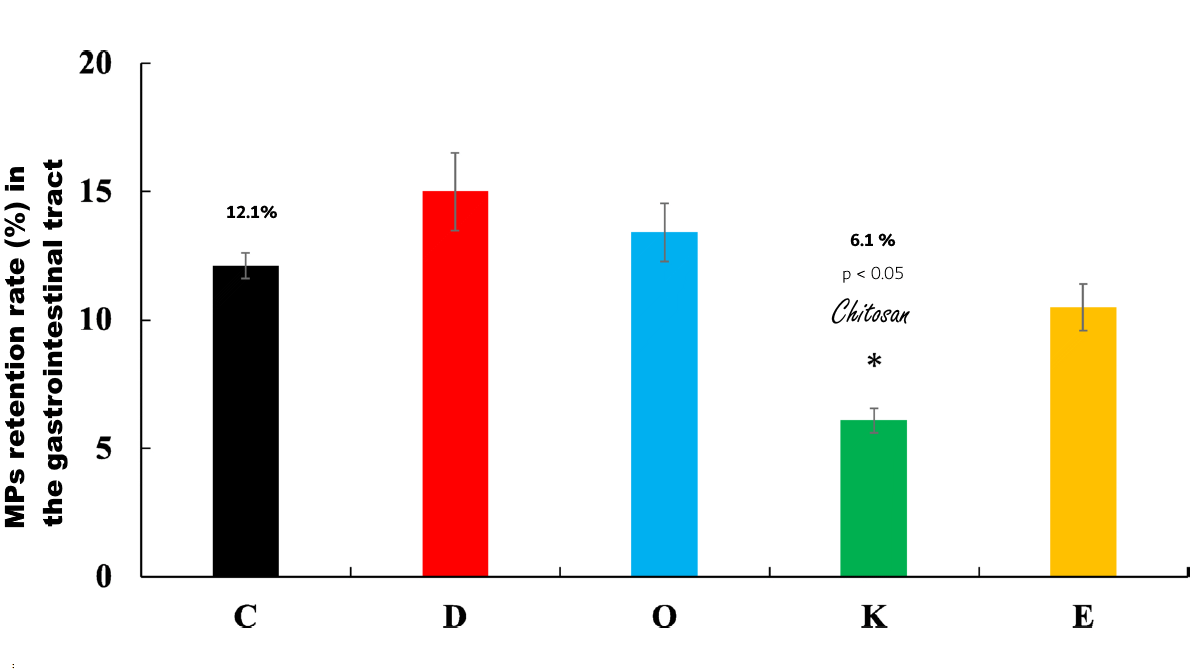
When the Japanese researchers examined how many microplastics they found in the gastrointestinal tract of the control group test animals after the supplementation period, they found approximately 12 percent of the microplastics. In the rats that had received chitosan, the researchers found 'only' 6 percent of the microplastics.
Mechanism
The researchers suspect that chitosan forms gel aggregates with microplastics in the stomach. The intestines cannot absorb these aggregates - and so microplastics leave the body with the feces.
More
The Japanese study provides proof of principle, but not yet proof that humans actually benefit from chitosan. In the report we will upload shortly, we do have that proof. Or at least something that looks very much like it.