ergo-log.com

Definition: "An ergogenic aid is any substance or phenomenon that enhances performance "

about us

/

contact

/

Ergo-Log


A diet rich in carotenoids reduces the risk of colon and rectal cancer

According to an Italian epidemiological study, consuming relatively high amounts of carotenoids reduces the risk of colon and rectal cancer. If you don't mind spinach or kale, such a carotenoid-rich diet is perfectly feasible.


A diet rich in carotenoids reduces the risk of colon and rectal cancer


Study
In the 1990s, researchers at the University of Milan asked 1,953 Italians, recently diagnosed with colon or rectal cancer, to answer questions about their diet. They also asked 4,154 other comparable Italians without colon cancer.

The researchers estimated the carotenoid intake of the study participants.

Based on their intake of alpha-carotene, beta-carotene, lutein, zeaxanthin, and beta-cryptoxanthin, the researchers divided the study participants into five equal-sized groups (quintiles). The researchers then determined whether the group with the highest intake [Q5] had a lower risk of colon or rectal cancer than the group with the lowest intake [Q1].

Results
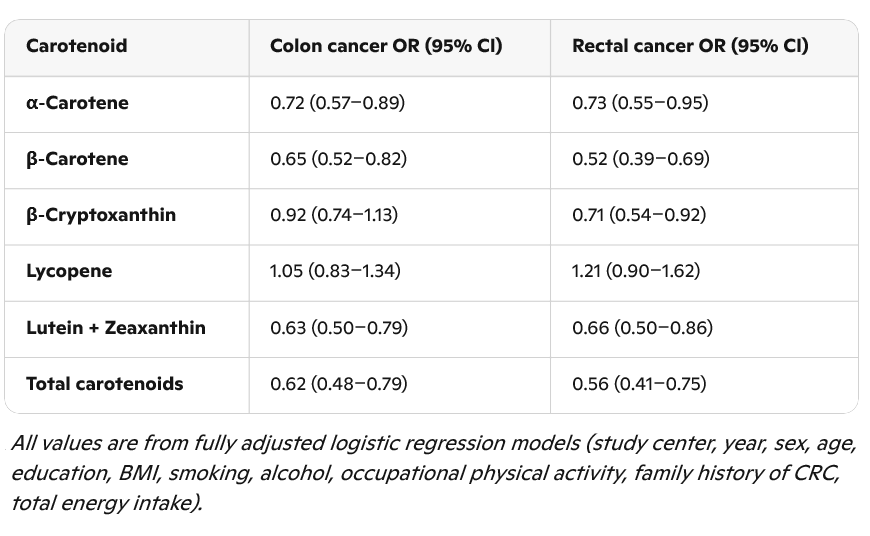
The group with the highest total carotenoid intake had a 38 percent lower risk of colon cancer and a 44 percent lower risk of rectal cancer than the group with the lowest intake. Beta-carotene, lutein, and zeaxanthin were particularly protective.

Alpha-carotene and beta-cryptoxanthin also provided protection, but to a lesser extent. Lycopene did not.

Click on the table below for a larger version.

A diet rich in carotenoids reduces the risk of colon and rectal cancer


A diet rich in carotenoids reduces the risk of colon and rectal cancer


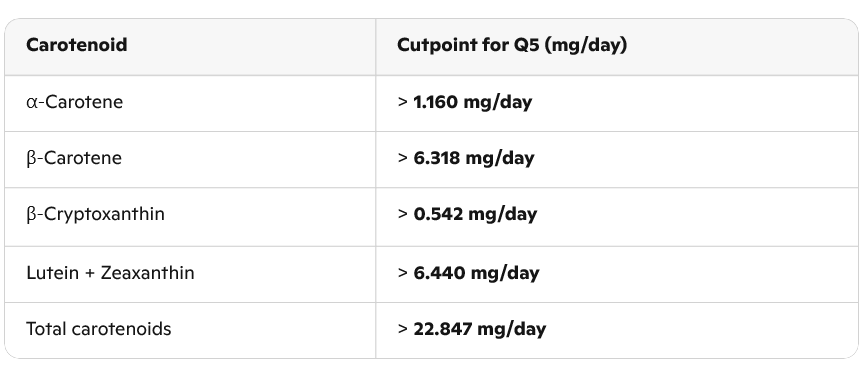
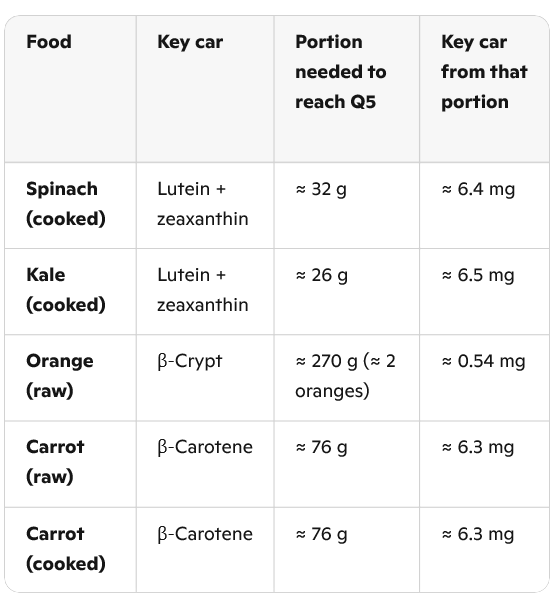
From the Italian publication, which incidentally appeared in the European Journal of Clinical Nutrition, we determined how many milligrams you need to consume daily for the carotenoids studied to reach Q5. You can find these values ​​in the table above.

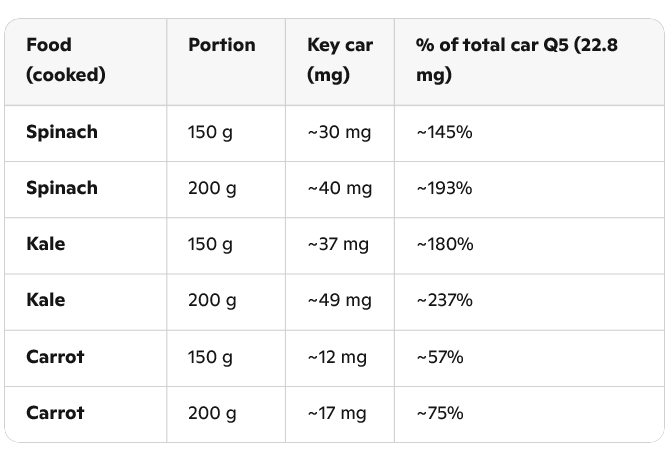
We then calculated how many grams you need to eat daily for a few good food sources of carotenoids to reach Q5, at least for those specific carotenoids.

As you can see, the amounts are modest. A few dozen grams are sufficient.

A diet rich in carotenoids reduces the risk of colon and rectal cancer

A diet rich in carotenoids reduces the risk of colon and rectal cancer


An average meal contains about 150-200 grams of vegetables. If you consume kale or spinach in those quantities, you'll easily reach Q5 in terms of your total carotenoid intake.

Mechanism
One of the mechanisms the Italian researchers mention is that carotenoids alter the function of immune cells in the intestines. They suspect that carotenoids switch macrophages - the immune cells in the intestinal wall - from their M2 state to their M1 state.

Macrophages are part of the innate immune system. They are different cells than NK cells, which are also part of the innate immune system. Macrophages and NK cells work together. Incidentally, macrophages are also found in the lungs.

In the M2 state, macrophages are focused on repair and inhibiting inflammation. That sounds good, but it gives cancer cells and cells infected by viruses a greater chance. In the M1 state, macrophages are more active against tumors and infected cells.

In M1 macrophages, genes for arginase-1 and iNOS are more active. The same applies to genes activated by interleukin-2 and interferon-gamma.
More:
Diet with lots of pumpkins, peppers and carrots reduces colorectal cancer risk 13.05.2018

Archives:
Preventing & Surviving Colon Cancer
Preventing & Surviving Cancer
Carotenoids


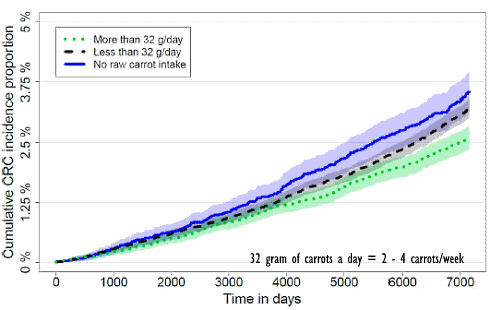
Eating a few raw carrots every week reduces your risk of colon cancer Cyanidin, the colon cancer killer in blueberries These Echinacea components kill colon cancer cells

Eating a few raw carrots every week reduces your risk of colon cancer
For quite some time now we have been immersed in the wonderful world of polyacetylenes, a group of health-improving compounds in carrots, parsnips and related vegetables that scientists have long overlooked.

Cyanidin, the colon cancer killer in blueberries
According to an in vitro study published in Scientific Report, fruits like blueberries contain phenols that activate the longevity enzyme SIRT6.

These Echinacea components kill colon cancer cells
Echinacea contains substances that kill cancer cells in vitro. Italian researchers at the University of Pisa discovered this in an older study, which they published in the British Journal of Pharmacology in 2008.