Study
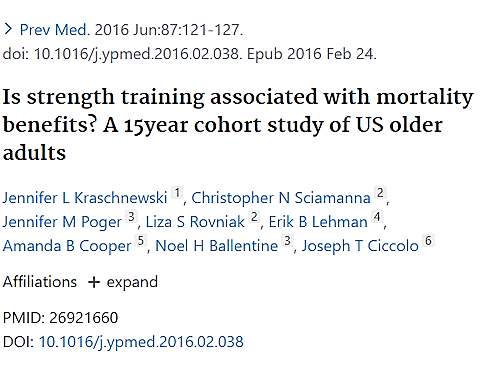
The researchers were able to follow the participants for up to fifteen years. During that period, 32 percent of them died. The researchers then determined whether strength training could reduce the risk of death.
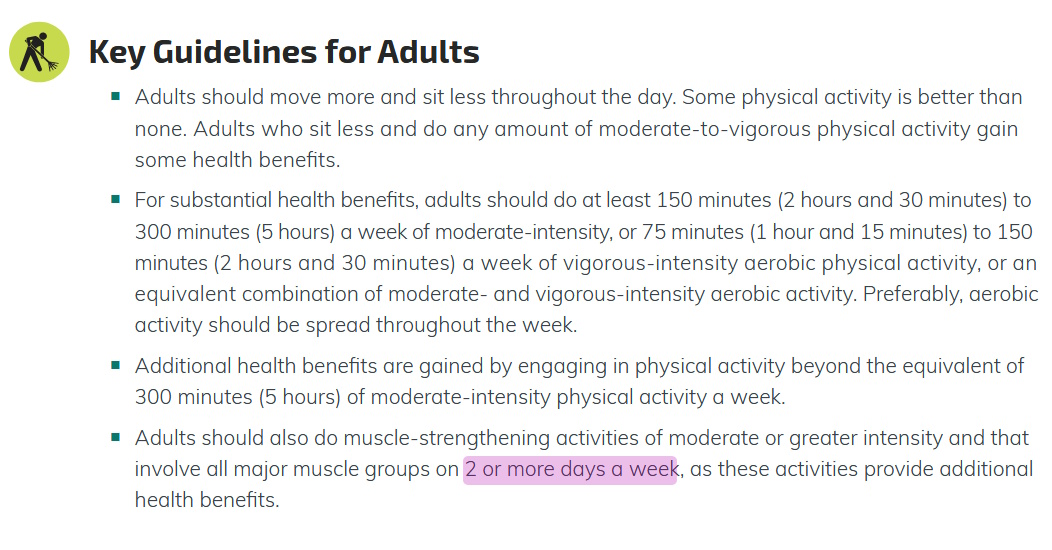
In the Physical Activity Guidelines for Americans, the US government advises adults and older adults to participate in some form of strength training at least twice a week. [odphp.health.gov.] Based on this, the researchers divided the study participants into two groups - one group that met the guidelines and one group that did not.
Results
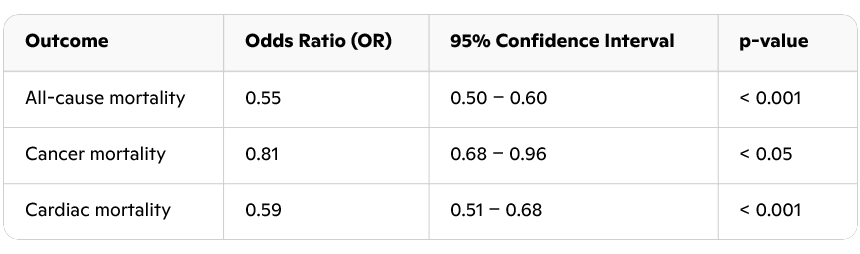
One in every ten study participants met the guideline. Specifically, 9.6 percent of study participants met the guideline. Those in this group had a whopping 45 percent lower risk of death than those who did not meet the guideline.
Click on the table below for a larger version.
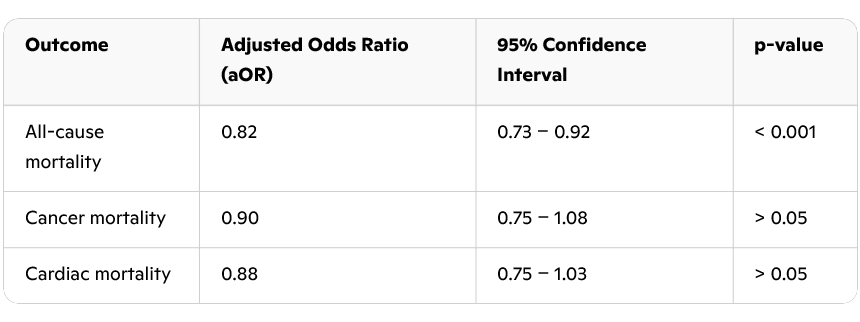
The researchers tried to rule out the second explanation as much as possible by eliminating confounding factors with statistical tricks. They did this for age, sex, race, ethnicity, education level, marital status, BMI, smoking, alcohol consumption, aerobic physical activity, and chronic conditions such as hypertension, diabetes, cardiovascular disease, and cancer.
When the researchers had neutralized these factors to the best of their ability, people over 65 who trained with weights at least twice a week still died 18 percent less often than people over 65 who did not meet the standard.
Conclusion
"This study further demonstrates the importance of encouraging doctors to recommend physical activity to patients as they would any other effective treatment, particularly since exercise has been shown to be as effective as some medications", the researchers write.
"Identifying interventions to successfully engage older adults in guideline-concordant strength training has the potential to significantly reduce all-cause mortality in this population."