
Study
On the second night, half of the participants again slept at 3 lux, while the other half slept in a room illuminated at 100 lux. At 100 lux you can’t read, work, or cook, but you can still move around the room without bumping into furniture.
Results
After a night of sleeping in a lighted room, insulin metabolism deteriorated. Insulin sensitivity decreased and insulin resistance increased.
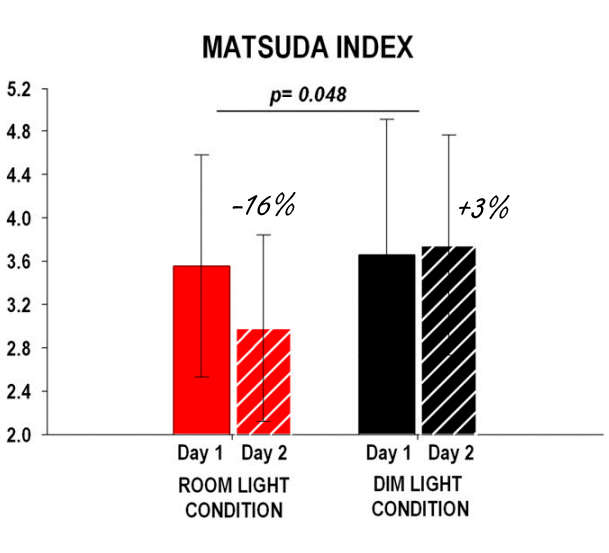
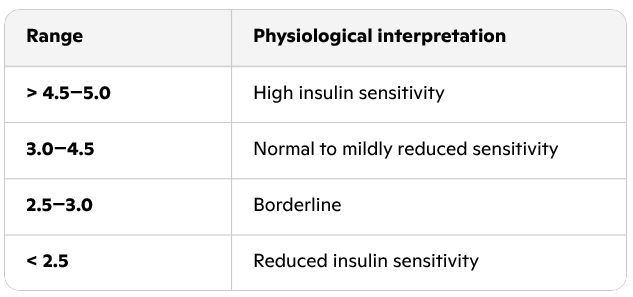
The Matsuda-index is a marker of insulin sensitivity. The more effectively the body moves glucose from the bloodstream into cells, the higher the index.
After one night of sleeping in a lighted room, the index decreased by 13 percent. After two nights of sleeping in a dark room, it increased by 3 percent.
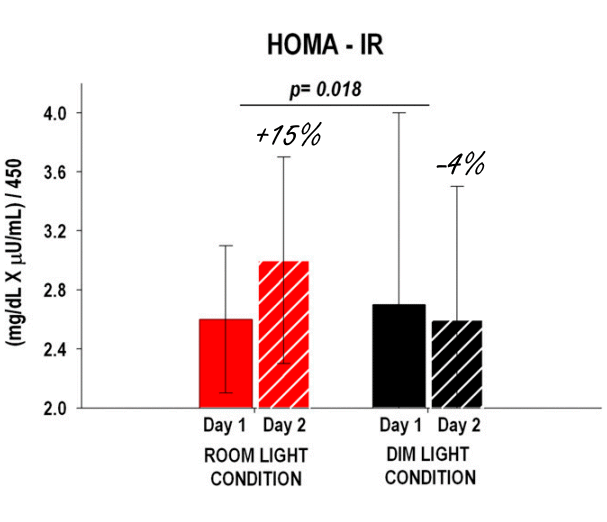
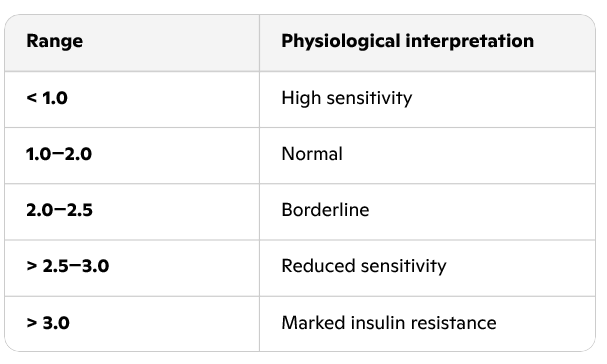
The HOMA-IR is a marker of insulin resistance. The higher the HOMA-IR, the more insulin the body needs in a fasting state to keep glucose levels within a normal range.
After one night of sleeping in a lighted room, the HOMA-IR increased by 15 percent. After two nights of sleeping in a dark room, it decreased by 4 percent.
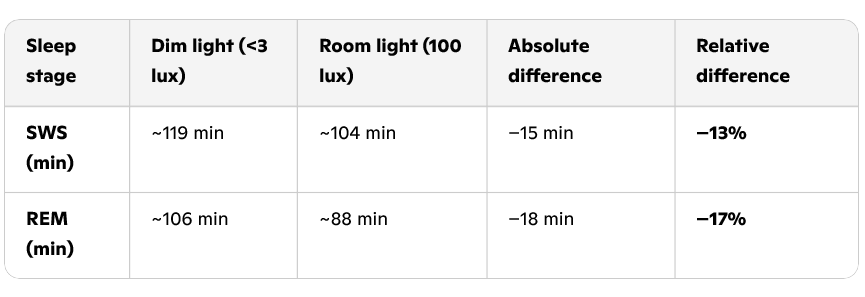
During REM sleep, the brain weakens redundant connections between neurons while strengthening the ones that matter. Irrelevant information fades into the background, and important information is consolidated.
During slow-wave sleep, or deep sleep, the body produces anabolic hormones, clears metabolic waste products, repairs tissues, and activates immune cells.
Conclusion
"The effects of light exposure at night, particularly during sleep, on cardiometabolic function could have implications for those living in modern societies where indoor and outdoor nighttime light exposure is increasingly widespread and where concerns regarding cardiometabolic health are also on the rise", the researchers write..
"Thus, it is plausible that decreasing exposure to indoor nighttime light during sleep could have beneficial effects on cardiometabolic health."


