Study
The women had clear menopausal symptoms, but these were not necessarily severe. They did experience hot flashes at least five times a day and suffered from frequent sweating attacks.
Dimpfel divided the women into two groups. For 28 days, the women in one group took a placebo daily, while the women in the experimental group ingested 280 milligrams of Salvia officinalis extract daily. Dimpfel used the product from A. Vogel, the sponsor of the study. It is marketed as Menosan. You can read more about this extract here.
The lead researcher of the study was employed by A. Vogel.
Results
The most convincing effects reported by Dimpfel related to scores on the Menopausal Rating Scale [MRS]. This is a standardized questionnaire that attempts to measure postmenopausal symptoms. The average total score decreased by 39 percent. There was a shift from 'moderate symptoms' to 'mild-to-moderate symptoms'.
Click on the table below for a larger version.
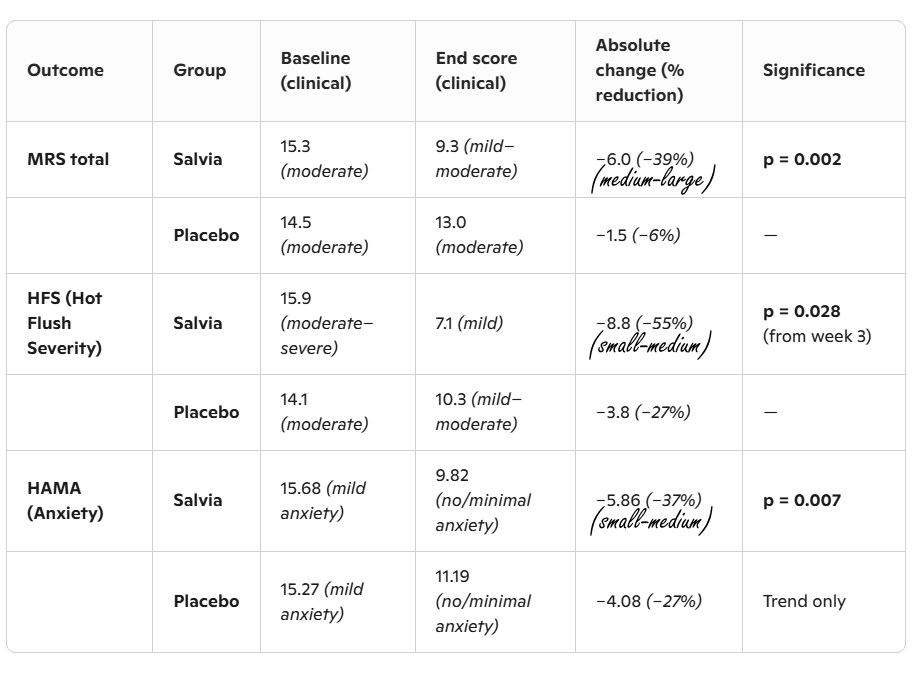
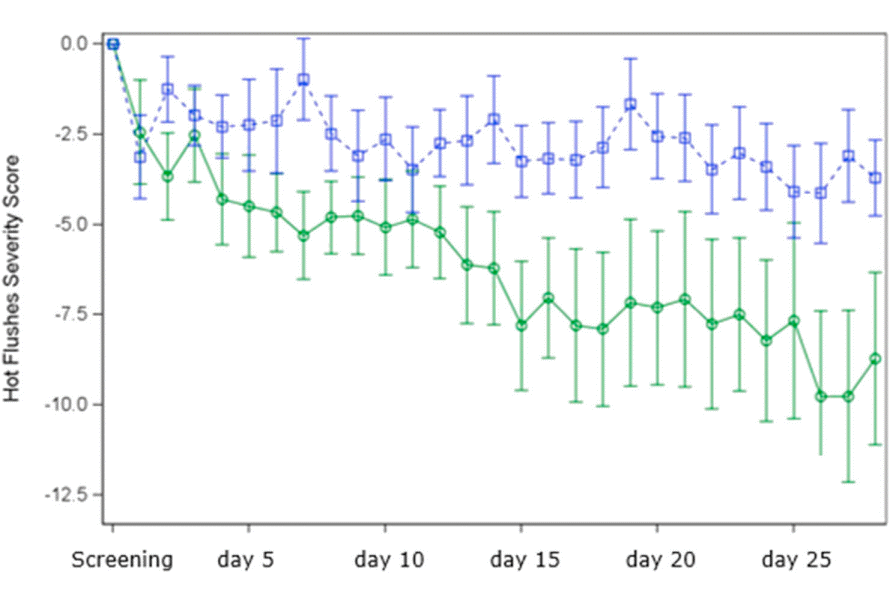
There was also a reduction in the placebo group, but it was not as large. It was not until after 3 weeks that the two groups differed significantly from each other on this point.
Furthermore, anxiety scores decreased in the Salvia officinalis group.
Mechanism
Dimpfel's expertise lies in the field of neuroadaptogens. [ResearchGate] Neuroadaptogens are plant extracts that naturally protect the brain against overload and stress.
Before supplementation began and on the last day of the supplementation period, Dimpfel determined the brain activity of the women.
In postmenopausal women, the intensity of all types of brain waves - delta, theta, alpha, and beta - is often elevated. That pattern is consistent with hyperarousal, cognitive problems, and fatigue. After 4 weeks of supplementation, that pattern had at least partially normalized in the supplementation group. Dimpfel suspects that this normalization underlies the decrease in postmenopausal symptoms in the experimental group.
Conclusion
"Salvia officinalis [...] is an effective and safe herbal approach for the long-term treatment of hot flashes and other climacteric symptoms in menopause," concludes Dimpfel.
This Salvia officinalis thing is becoming increasingly interesting... More soon.