
Study
The subjects in the placebo group received a placebo daily, while the subjects in the experimental group received a daily supplement containing 100 milligrams of Q10. The subjects took their supplement with a meal.
The subjects used rheumatoid arthritis medication during the trial. The trial lasted two months.
Results
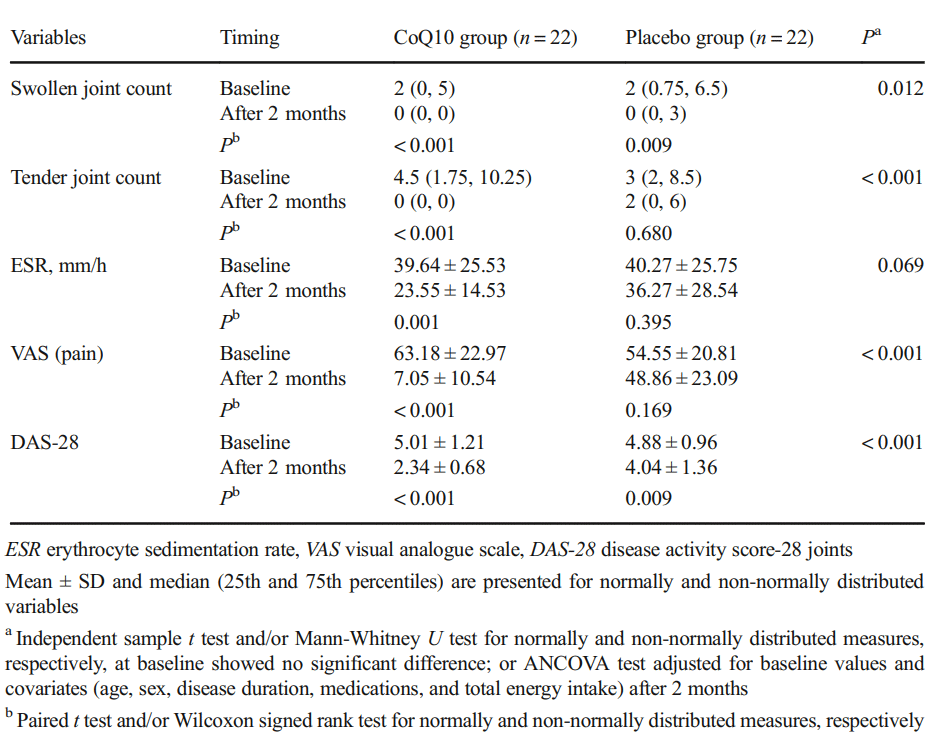
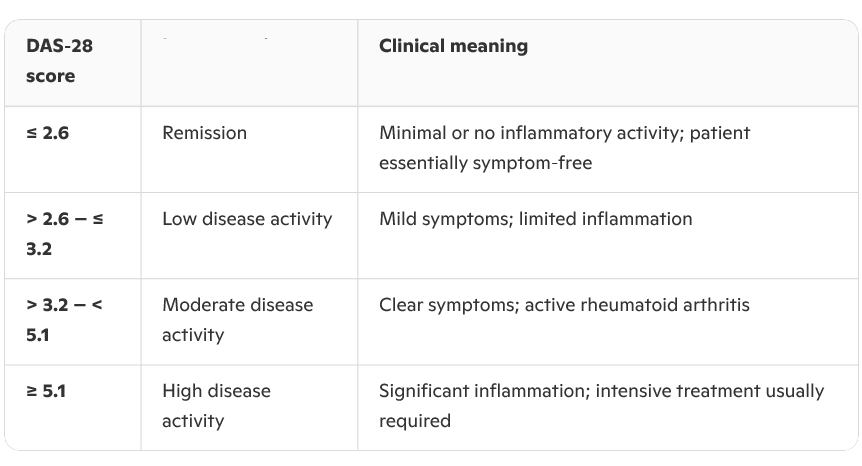
The researchers determined the severity of rheumatism using the DAS-28 just before the trial began and on the final day. This is a score based on the number of painful and swollen joints, the results of blood tests, and the pain reported by patients.
The lowest possible score on the DAS-28 is 0, the highest is 9.4.
In both groups, the DAS-28 score decreased statistically significantly, but the decrease in the placebo group was negligible. In the Q10 group, on the other hand, the DAS-28 score decreased by 53 percent.
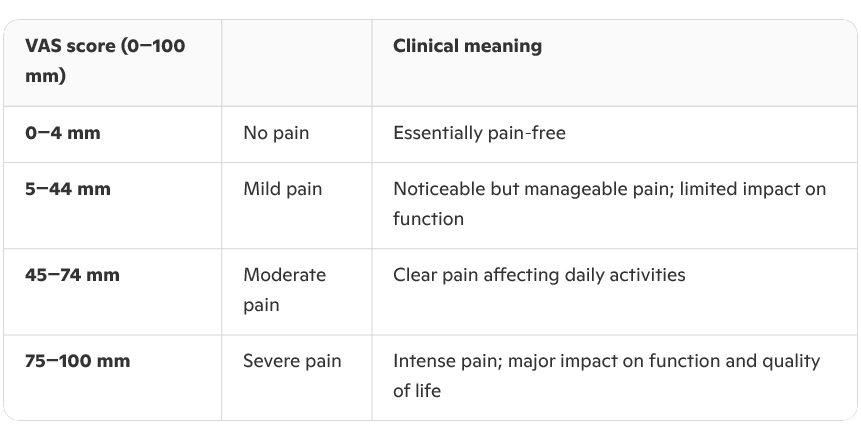
In the Q10 group, pain scores dropped even more sharply. The average score dropped to the level where the pain was almost completely gone.
Click on the tables below for a larger version.
Mechanism
The researchers observed that the concentration of the enzyme matrix metalloproteinase-3 [MMP-3] increased in the blood of the subjects in the placebo group. In the subjects who received Q10, the concentration of MMP-3 remained constant.
MMP-3 breaks down cartilage and connective tissue. It plays a key role in joint damage in rheumatism because it not only breaks down tissues itself but also activates other MMP enzymes with a similar destructive effect.
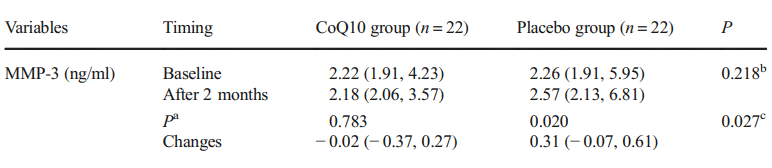
In another publication, which is incidentally based on the same study, the Iranians report that Q10 supplementation prevented the rise in the cytokine TNF-alpha. [Arch Med Res. 2015 Oct;46(7):527-33.] In the placebo group, TNF-alpha activity increased by 32 percent.
This is relevant. TNF-alpha activates MMP-3.
Conclusion
"To our knowledge, it is the first randomized placebocontrolled clinical trial that assesses the effects of Q10 supplementation in rheumatoid arthritis patients", the researchers summarize.
"However, the small number of participants and low dose of supplement are the main shortcomings."
"Altogether, it seems that Q10 may provide a new complementary approach for patients with rheumatoid arthritis."


