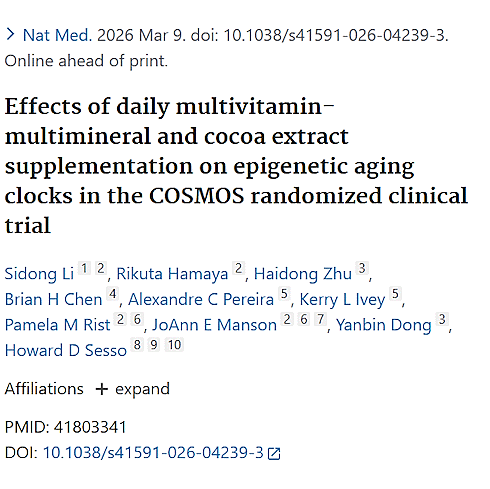
Study
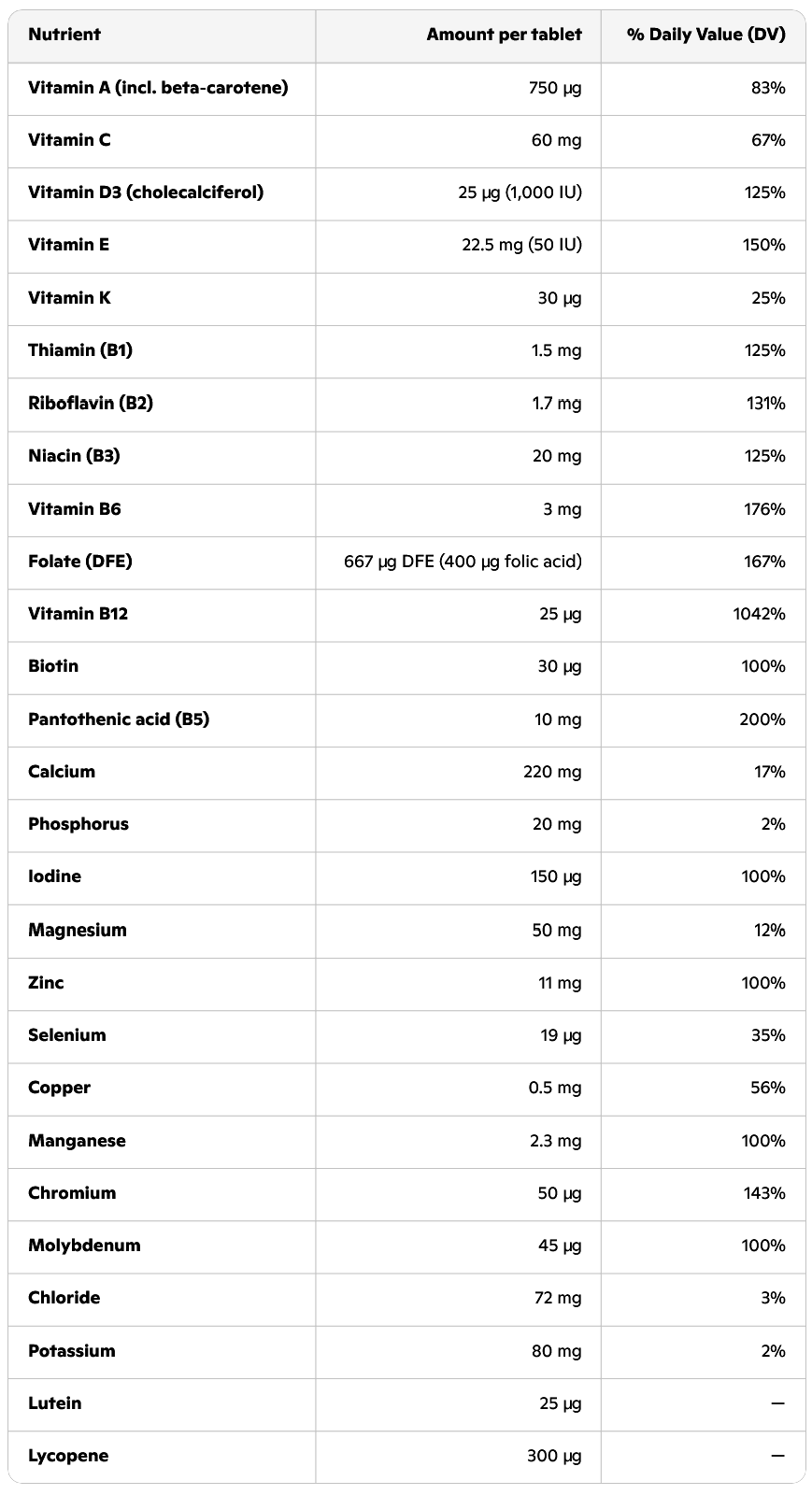
Cocoa supplementation had no effect in the study we are discussing today. So we won't be discussing that. Instead, we will discuss the effect of the multivitamin. That did have an effect. You can see the composition of the supplement below. Click on the table for a larger version.
The researchers took small blood samples from their subjects just before the study began, after one year, and just before the study ended. They extracted the white blood cells from these samples. Subsequently, they determined the aging of the DNA of those cells using molecular techniques.
Results
The researchers looked at several markers that indicate the methylation of genes in the DNA of the cells. Two markers, PCHorvath and PCHannum, showed no effect. These markers predict chronological aging.
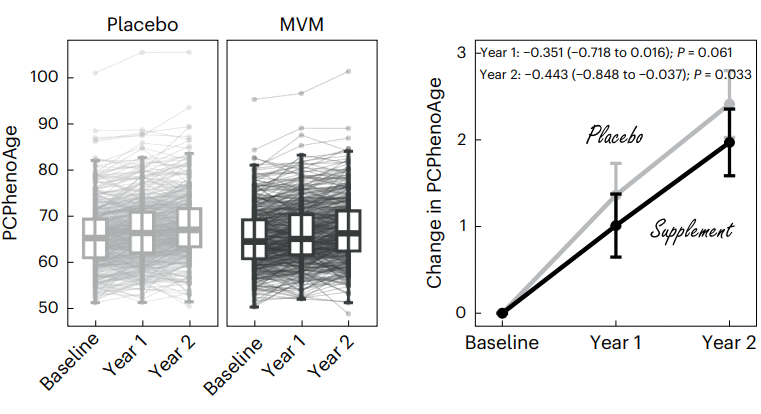
Two other markers, PCGrimAge and especially PCPhenoAge, did differ significantly between the placebo and supplement groups. These markers primarily indicate the likelihood of deteriorating health due to aging. They look at the methylation of genes involved in inflammation, the aging of the immune system, and the deteriorating glucose metabolism.
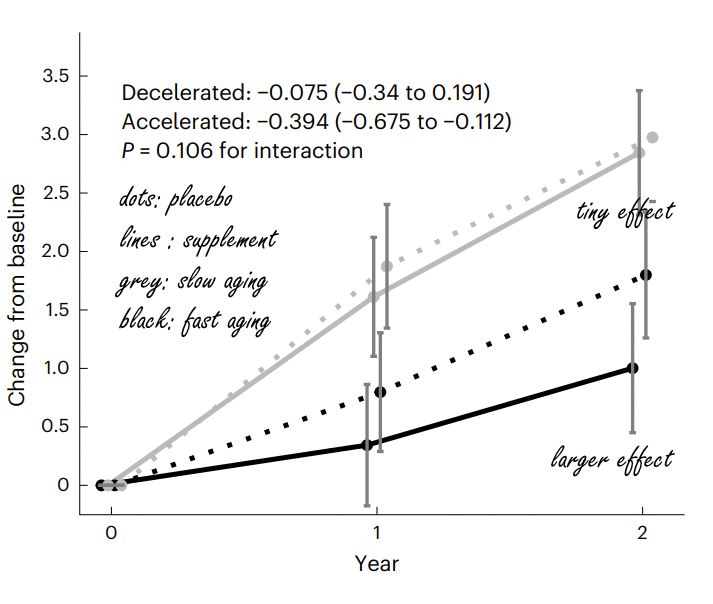
According to the PCPhenoAge, after two years of multivitamin supplementation, the subjects were roughly five months 'younger' than the subjects who had received a placebo for two years. Naturally, the researchers cannot say whether the subjects in the supplement group will actually remain 'young' for longer.
The figures below relate to the PC-PhenoAge. Click on them for a larger version.
Conclusion
"There is a lot of interest today in identifying ways to not just live longer, but to live better," says lead researcher Howard Sesso of Brigham and Women's Hospital & Harvard Medical School in a press release. [eurekalert.org 9-Mar-2026]
"It was exciting to see benefits of a multivitamin linked with markers of biological aging. This study opens the door to learning more about accessible, safe interventions that contribute to healthier, higher-quality aging."
Hmm.
Scientists have been studying the potential anti-aging effects of vitamin supplementation for nearly a century now. If they are still opening doors after a hundred years, they are not making much progress.
"We plan to do follow-up research to determine if the slowing of biological aging - observed through these five epigenetic clocks, and additional or new ones - persists after the trial ends," says co-author Yanbin Dong of Augusta University.
Ah look. That's where the truth comes out. The researchers want even more research. Read: money. Even in science, the money needs to keep coming in.