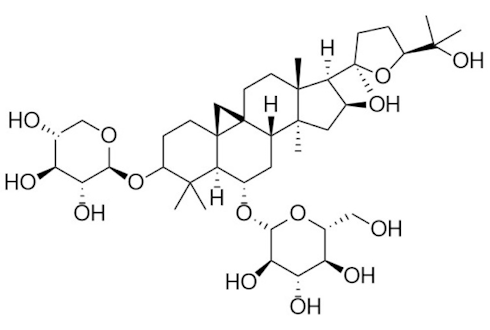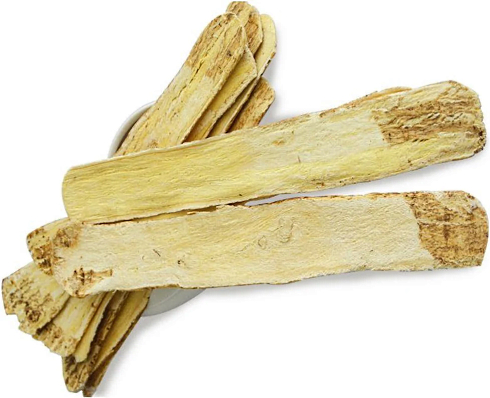
Study
For three months, the participants in the placebo group took capsules containing maltodextrin daily. The participants in the experimental group took a capsule containing 50 milligrams of AstraGin twice a day. The participants took their capsules just before a meal.
You can read more about AstraGin here.
Results
On the final day of the supplementation period, the researchers administered 5 grams of L-arginine to their subjects, dissolved in a glass of water. In the hours following, the researchers observed fifty percent more L-arginine in the blood of the experimental group than in the blood of the placebo group.
AstraGin therefore increases the absorption of arginine. That is interesting knowledge for supplement manufacturers, but it is not the most striking finding in this study. The effect of AstraGin on the subjects' condition - on the severity of their ulcerative colitis - is downright spectacular.
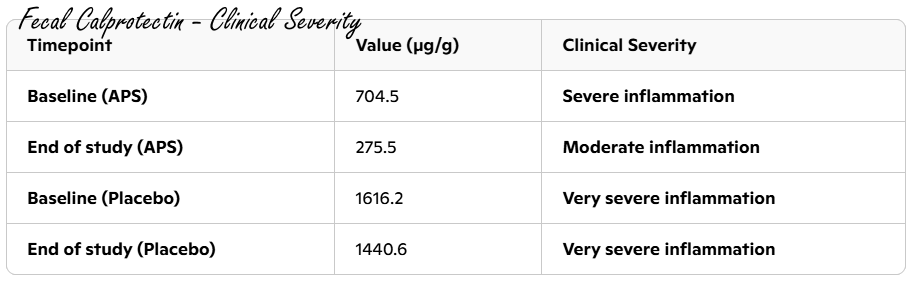
Supplementation with AstraGin reduced the concentration of fecal calprotectin in the subjects' stool by 61 percent. Fecal calprotectin is a substance released by immune cells in the gut during inflammation. This decrease suggests that the severity of the ulcerative colitis has been significantly reduced.
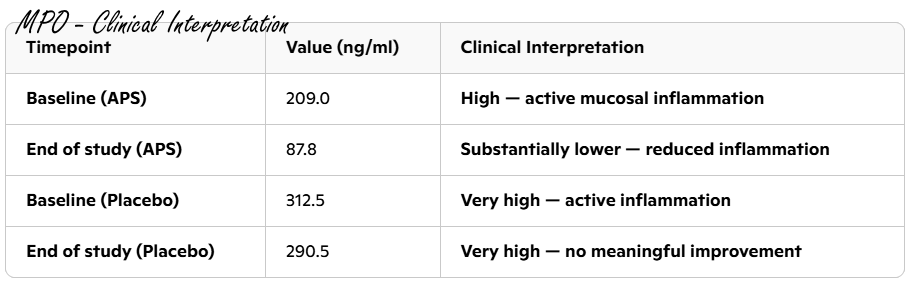
In biopsies of the inflamed intestine, the researchers found a 58 percent decrease in the activity of the enzyme myeloperoxidase in the subjects of the AstraGin group. This enzyme is released during inflammation. This decrease also suggests a reduction in the severity of the condition.
Finally, the researchers administered a mixture of the sugars lactulose and mannitol to their subjects and subsequently checked whether these sugars were found in the urine. Healthy intestines absorb mannitol well, but lactulose only in small amounts. The ratio between these two sugars is higher the more the intestines 'leak'. This ratio also improved in the AstraGin group.
No shifts occurred in the placebo group.
Click on the tables below for a larger version.
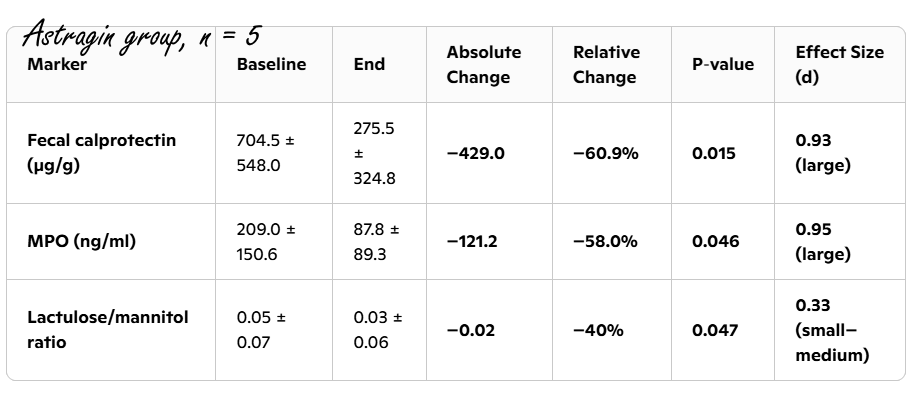
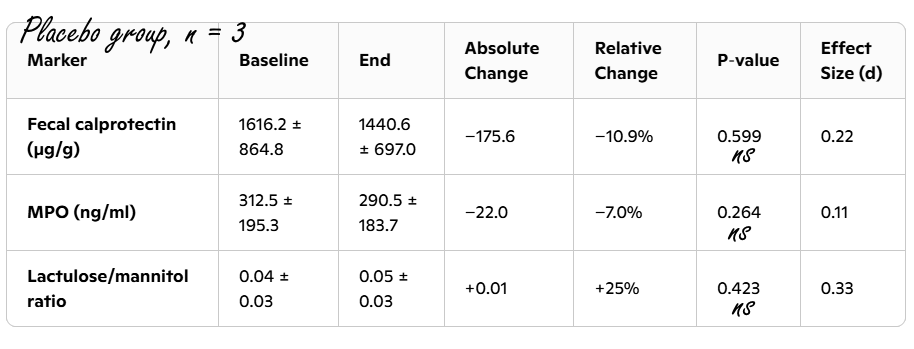
The tables below interpret the shifts in the AstraGin group. As you can see, the decreases in fecal calprotectin and myeloperoxidase indicate a significant improvement in ulcerative colitis.
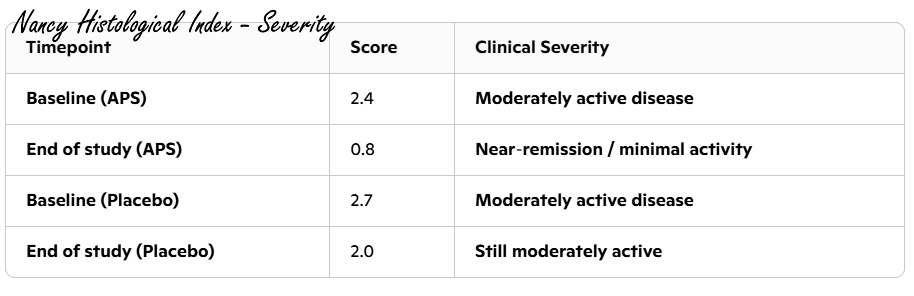
Even more striking were the results of a pathological examination of the tissue samples. According to that assessment, the Nancy Histological Index in the AstraGin group dropped to a level where the disease is nearly in remission.
More soon.