Study
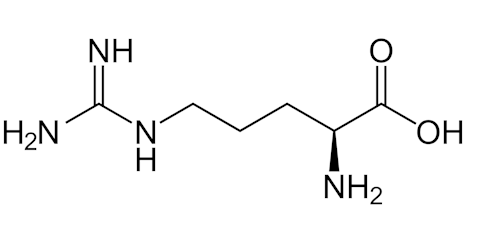
The researchers used a supplement marketed as Arginaid. It is a product of Nestle Health Science, but Nestle did not sponsor the study.
Arginaid is a powdered supplement packaged in sachets. Users tear open the sachets, dissolve the powder in a glass of water, and drink it.
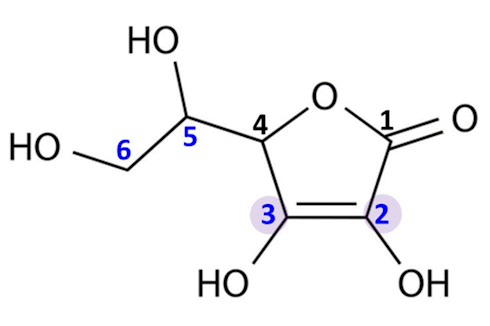
Each sachet contains 4.5 grams of arginine, 4 grams of carbohydrates, 155 milligrams of vitamin C, and 60 milligrams of vitamin E. In their study, the researchers gave the patients two sachets per day. This equates to 9 grams of arginine, 8 grams of carbohydrates, 310 milligrams of vitamin C, and 120 milligrams of vitamin E.
Almost all the subjects were well-nourished. Some were even overweight. So, if the supplement worked, it wasn't because it eliminated a calorie deficit.
The researchers compared the speed at which their subjects' wounds healed with that of a group of 17 similar patients who had not received supplements.
Results
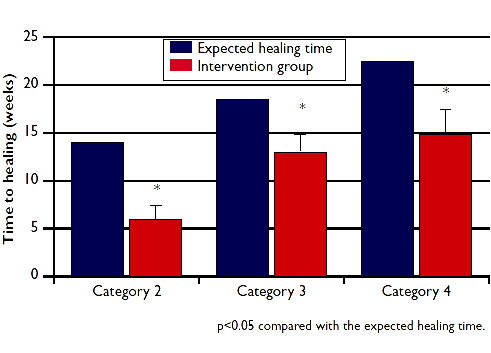
For subjects in the control group, wound healing took an average of 21 weeks. For subjects in the supplementation group, it was 10.5 weeks. This difference was statistically significant. Arginine supplementation therefore halved the time it took for the wounds to heal.
The researchers divided their data by pressure ulcer severity. They used a classification system, which is explained in the table below. Click on it for a larger version.

Mechanism
Immune cells use arginine to clear away pathogens and abnormal cells, the Australians write. Arginine also makes blood vessels more flexible, increasing the supply of nutrients to damaged tissues.
The most important mechanism is likely that the body converts arginine into proline and hydroxyproline, two important building blocks of collagen. If the body can produce more collagen, it can close wounds more quickly.