Study
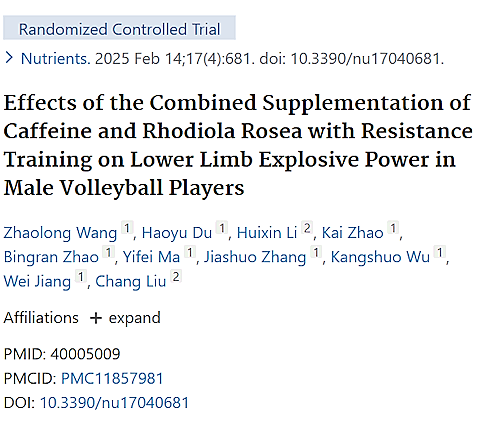
A placebo group received capsules containing no active ingredients for four weeks.
A second group took 2.4 grams of rhodiola daily. We were unable to determine what type of product the men received, nor the concentration of the active ingredients in the product. The athletes divided their dose into two intake sessions: half with breakfast and half with dinner.
A third group took a dose of 3 milligrams of caffeine per kilogram of body weight half an hour before training. A person weighing 80 kilograms (176 lbs) therefore took 240 milligrams of caffeine.
A fourth group of subjects took both rhodiola and caffeine.
All participants followed the same training program for four weeks, training their lower body twice a week. The program consisted of squats, deadlifts, and leg presses, all performed at 70-85% of 1RM. The athletes also performed plyometric exercises, such as the two-step approach jump, the countermovement jump, and vertical jumps.
Results
After four weeks, the subjects in the rhodiola and caffeine group performed slightly better on some aspects than the subjects in the placebo group. Overall, the effects were minimal.
The story changes when it comes to the combination group. This combination of rhodiola and caffeine improves athletic performance across the board. With the combination, the researchers observed not only an improvement in explosive power but also a decrease in the rate at which explosive power declines during bursts of explosive effort. Moreover, the combination of rhodiola and caffeine reduced fatigue during physical exertion.
Click on the table below for a larger version.

Mechanism
This enhances the stimulant effect of caffeine. Caffeine blocks adenosine receptors. This increases the concentrations of dopamine, adrenaline, and noradrenaline in the body, boosting muscle cell function.

Conclusion
"This finding provides a new nutritional strategy for athletes to optimize physical performance during high-intensity training and competition", the researchers summarize.