
ergo-log.com

Definition: "An ergogenic aid is any substance or phenomenon that enhances performance "

about us

/

contact

/

Ergo-Log


Reducing carbohydrate intake can help prevent seizures in epilepsy

For people with epilepsy, significantly reducing carbohydrate intake while simultaneously avoiding rapidly absorbed carbohydrates can help decrease the frequency of epileptic seizures. This is the main finding of an umbrella review published in Frontiers in Nutrition.


Reducing carbohydrate intake can help prevent seizures in epilepsy


Study
Neurologists from the First People's Hospital of Xiangtan City, China, identified 18 meta-analyses in the scientific literature that examined the effects of diet and antioxidant supplementation on epilepsy - specifically focusing on seizure frequency.

Results
In this umbrella review, antioxidant supplementation proved ineffective. However, drastically reducing dietary carbohydrates [a ketogenic diet] or following a diet that excludes rapidly absorbed carbohydrates [a low-glycemic diet] did prove effective.

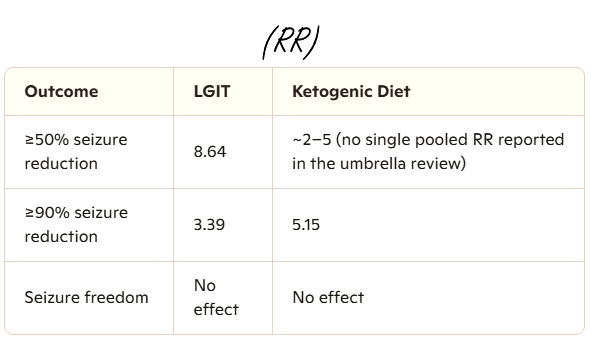
When the researchers determined the likelihood of achieving at least a 50% reduction in seizure frequency, they found that a ketogenic diet increased these odds by a factor of 2 to 5.

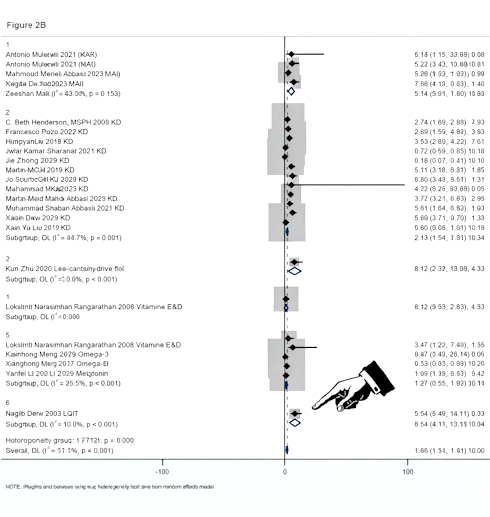
A low-glycemic diet was even more effective, increasing the likelihood of at least halving the number of seizures by nearly a factor of 9. This is what the small hand icon in the blobbogram below indicates.
Reducing carbohydrate intake can help prevent seizures in epilepsy


Reducing carbohydrate intake can help prevent seizures in epilepsy


Reading between the lines, it appears the researchers favor the low-glycemic diet over the ketogenic diet, even though the latter has been studied more extensively.

One of the reasons for this is that they observed that a large group of study participants could not sustain the ketogenic diet. Another reason is that a ketogenic diet increased the risk of constipation and kidney stones. These drawbacks are not associated with a low-glycemic diet.

Conclusion
While the researchers find the effect of low-carbohydrate and low-glycemic diets on epileptic seizures scientifically interesting, they notably make no recommendations for neurologists.

The reason for this is the limited quality of the available studies, which, in most cases, was weak to moderate.

Low-glycemic diet
When researchers use a low-glycemic diet in a scientific study, they typically remove all carbohydrate sources with a glycemic index higher than 50.

At the same time, they reduce total carbohydrate intake to sixty grams per day. A typical diet provides approximately 200 to 300 grams of carbohydrates per day.

More:
Schizoaffective disorder disappears with keto diet 15.02.2025
Keto diet makes psychiatric patients physically and mentally healthier 15.05.2024
This is the effect of a keto diet on Alzheimer's patients 15.09.2021

Archives:
Slow Carbs & Low Glyc
Low Carb Diet


Less carbs, better memory Ketogenic diet may help prevent dementia This is the effect of a keto diet on Alzheimer's patients

Less carbs, better memory
A diet from which you derive energy mainly from fats and proteins, and not from carbohydrates, improves memory function in elderly people.

Ketogenic diet may help prevent dementia
If you start a diet with extremely few carbohydrates at a young age, you may protect your brain against Alzheimer's disease and other forms of dementia.

This is the effect of a keto diet on Alzheimer's patients
A low-carbohydrate diet improves the memory of healthy people. Does this mean that a ketogenic diet has a positive effect on Alzheimer's patients?