

Study
In that study, the researchers divided 55 subjects aged 40-80 with Parkinson's disease into a placebo group and an experimental group.
Every evening, the subjects drank a cup of tea for a month. The subjects in the experimental group drank Origanum majorana tea, while the subjects in the placebo group drank tea without bioactive substances.
You can find more details about the subjects and the tea used here.
Results
Just before the experiment began and on the final day, the researchers analyzed their subjects' blood. This allowed them to observe that the activity of the endogenous antioxidants superoxide dismutase and catalase increased in the marjoram group.
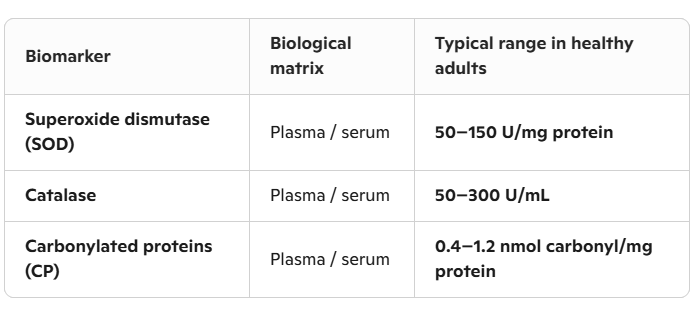
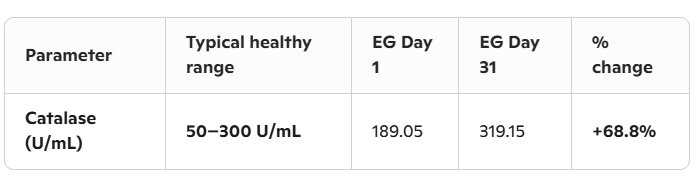
The effect on catalase, in particular, was strong. Its activity increased by nearly seventy percent. Furthermore, marjoram supplementation raised the activity to the upper end of the normal range.
Click on the tables below for a larger version.
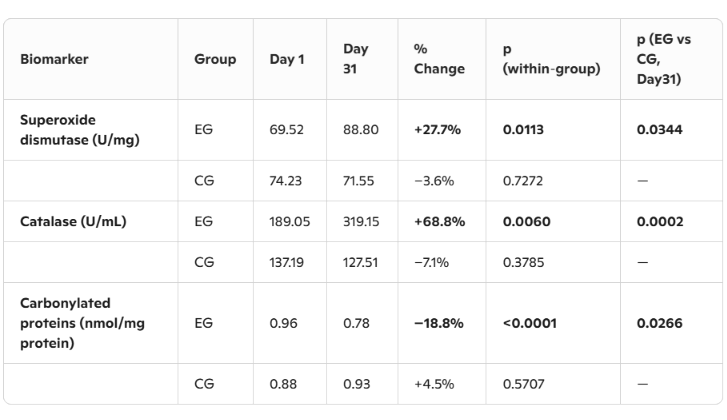
The concentration of oxidized protein in the blood of the experimental group decreased by nearly twenty percent. This indicates a decrease in oxidant activity.
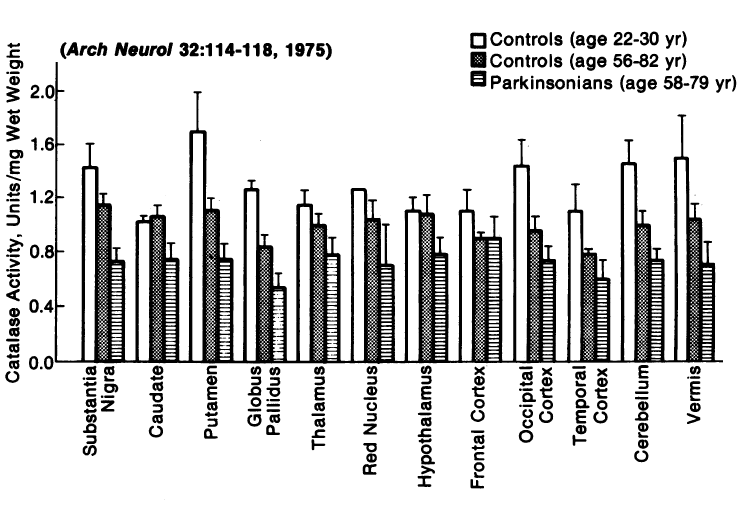
It was already known in the 1970s that catalase activity is reduced in the brains of people with Parkinson's. [Arch Neurol. 1975 Feb;32(2):114-8.] The researchers suspect that supplementation with marjoram alleviates the severity of the condition, partly by stimulating catalase.
Conclusion
"The consumption of Origanum majorana tea on could improve oxidant/antioxidant biomarkers in patients with idiopathic Parkinson's disease and may delay the progression of the disease," the researchers write.
"Our findings suggest a potential new therapeutic approach for patients with Parkinson's disease."


